


Tourists Go Home!

Tourism, dependence, and local development

Our current age of globalization sells us an idea: We are “Citizens of the World”. Yet the words painted on the facades of the world's most iconic buildings defy that. “Tourists go home!", the slogan of the anti-tourist movements emerging throughout popular tourist destinations, serves as a reminder that our current world order has significant countercurrents, and the economies of tourism prove to be one as well. In fact, it seems that this unrest has led to a new social cleavage: one between locals and tourists, travelers, “digital nomads”, and expats.
Locals have fears rooted in a multitude of factors: the dilution of their culture for the sake of tourists; economic insecurity due to gentrification; displacement; large-scale privatization; as well as having more regressive reservations such as xenophobia or racism. On the other side, the driving narrative of this argument has emerged: “Where would you be without our money?” Many of these economies rely, at least in part, on tourism revenue, as their willingness to host is not merely an altruistic endeavor. However, it is the very dependence on said sector that creates tensions within the social fabrics of these places (Britton, 1982; Scheyvens, 2011).
Tourism’s benefits fundamentally depend on who captures its revenues, how dependent livelihoods become on continued visitor spending, and whether institutions use those revenues to improve living conditions for locals.
The Economic Mechanisms of Dependence - Tourism Dependence
These tourist destinations often become what is known as a Monoeconomy – an economic model that relies on a single sector for its economic activity. This context has enabled unprecedented economic growth in developing nations (Sequeira & Nunes, 2008). However, this growth has coincided with deepening inequalities in wealth distribution, and the creation of new social and economic barriers. The central question is whether the economic growth these regions experience through exposure to tourism markets leads to meaningful development that truly benefits locals, and, if so, whether it is a sustainable economic model. GDP per capita is an aggregate indicator, but it ignores how wealth is distributed, held, and invested, and it cannot measure insecurity or instability on its own (Sen, 1999).
Tourism creates economic activity through more mechanisms than simply tourists throwing cash around. The hospitality, construction, and services sectors create jobs. Small and Medium Enterprises often thrive in tourist hubs as cultural marketplaces, where everyday items are sold as souvenirs. Tourism also functions as a vehicle of soft power and diplomacy. Hierarchies of cultural patronage are established and reinforced through the experiences of affluent travelers, such as Italian food, Japanese media and conveniences, and South Korean music, film, and beauty culture. At a structural level, administrative bodies use tourism for its economic and intangible benefits, regardless of how locals experience it.

In many of these places, labor shapes itself around the market mechanisms that drive the economies, leading to an allocation of occupations that may not satisfy the locals. The Balearic Islands of Spain illustrate this tension: Tourism activities accounted for roughly one third of direct employment in the region (OECD, 2023). Meanwhile, the OECD’s 2023 regional assessment reported that around 36% of the population had completed tertiary education, above the EU average of 32%. Yet the same assessment identified limited opportunities for qualified professionals, particularly young people, who leave the islands in search of better prospects (OECD, 2023).
In relation to the argument in question, monoeconomic dependence implies two things:
Locals are economically reliant on tourism.
Locals are subject to the tourism market.
The former does not give credit to the tourists’ stance, as it implies the latter. Tourist-dependent developing countries and regions have historically shown more extreme economic fluctuations than other countries, reflecting patterns seen in countries that fall into resource traps. Research helps specify this risk: Jackman (2014), examining 34 small island developing states, found a positive relationship between tourism specialization and output volatility, although the relationship varied across regions. Ghalia and Fidrmuc (2018) found that countries highly dependent on both tourism and trade experienced lower growth, consistent with a Dutch disease effect. This means that the livelihood of locals hinges on a favorable market– a notoriously unreliable support to lean on.
No recent situation showed the gravity of this problem more than the 2020 COVID pandemic. As lockdown kept people at home, docked boats, and grounded flights, service and hospitality economies were crippled. The Maldives’ GDP contracted by 33.5%, the Balearic Islands by 23.7%, and Bali’s by 9.3% (BPS-Statistics of Bali Province, 2021; Govern de les Illes Balears, 2021; International Monetary Fund [IMF], 2023). In the Balearic Islands, tourism directly or indirectly supported around 42% of employment in 2019 (Govern de les Illes Balears, 2022). In the Maldives, tourist resorts alone employed 55,874 people in 2022, while in Bali, accommodation and food services accounted for 14.31% of employment in 2024 (Maldives Bureau of Statistics, 2024; LPEM FEB UI, 2026). Many people who work within these sectors live precariously, especially in developing countries that are reliant on tourism (International Labour Organization [ILO], n.d.). Countries with more refined and diversified markets also suffered but were able to survive and maintain productivity. These monoeconomic countries instead experienced much more severe losses in economic output.
In other regions, reliance on tourism means they are subject not only to that market but also to global perceptions. Concerns about safety in these regions are often publicized and cause fluctuations as well. On the 12th of January, 2016, Istanbul’s historic tourist district, Sultanahmet, was the victim of a terrorist bombing, and on the 28th of June of the same year, there was another attack at Atatürk Airport. The IMF reports that European tourism to Türkiye fell by over 30% between January and September that year (IMF, 2017). In February of this year, parts of Mexico were plunged into chaos following the killing of CJNG leader “El Mencho” during a military operation. As Cartel violence exploded, safety ratings fell, and flight cancellations increased. Puerto Vallarta alone saw about 15,000 fewer international tourists than the previous year, along with a 595 million Mexican peso drop in total tourism spending (Munguía, 2026). These situations often temporarily push prices down and significantly limit traffic, and the perception they create can persist for long periods.

The problem is that dependence in this context is asymmetrical. While destinations may rely heavily on visitors, tourists rarely depend on any particular destination, as the experience on offer is often substitutable. If a country enters lockdown or is perceived as less safe, tourists can easily choose to go somewhere else. The destination, however, cannot redirect its infrastructure, workforce and production towards another industry with comparable ease. This imbalance leads to an unequal relationship, as visitors can take their capital elsewhere far more easily than residents can find alternative livelihoods.
Dualization
The economic growth creates a socioeconomic ecosystem that foments dualization, the widening of economic and social divisions, through two different dimensions:
Intra-local dualization: divisions among residents, as those who own tourism businesses or property capture greater benefits, while others face insecure employment, rising living costs, or displacement.
Dualization between locals and foreigners: divisions between residents and tourists, expatriates, or foreign investors whose greater purchasing power and access to resources can reshape housing, businesses, and public spaces around their needs.
Within these countries, when the benefits of this growth are internalized, as in retained by locals rather than lost elsewhere, it often reinforces preexisting class hierarchies. Profits are not redistributed proportionately through wage growth or infrastructure investment (Britton, 1982; Scheyvens, 2011). In particular cases such as the favelas of Rio de Janeiro or Sa Pa in Vietnam, infrastructural development may be antithetical to the status of these locations, as poverty or simplicity may be part of the appeal. This permeates within these cultures as well. The everyday conditions and survival practices of poorer communities can themselves become tourist commodities, marketed by businesses whose interests differ from those of residents. In Dharavi, Mumbai, for example, research shows how tours recast precarious livelihoods as inspiring displays of resourcefulness, while downplaying the deprivation that makes such resourcefulness necessary (Nisbett, 2017). Similar practices emerge in Rocinha, Brazil and Tepito, Mexico.
In these economies, you have those who work in tourism as the insiders, and those who do not as outsiders. Insiders have far more opportunities for professional and economic growth because tourism is a developed economic sector, and they often earn higher wages at large international chains. However, within insiders, substantial dualization remains, as owners and bosses often receive most of this international capital, while employees do not diverge much from their local economic context.
A prominent point of discussion is gentrification, which was the leading cause of the anti-tourism protests in Barcelona (July 2024) and Mexico City (July 2025) (Associated Press, 2025; Reuters, 2024). As wealthier foreigners bring a higher willingness to pay, markets react by raising prices, and locals struggle to keep up. In Barcelona, the expansion of Airbnbs has increased residential rents and property prices (Garcia-López et al., 2020). A process of residential deurbanization has pushed locals to the peripheries of their own hometowns as bustling city centers become hubs for temporary residencies such as Airbnbs or properties affordable only to foreign capital. Pillars of life become shells that function as retreats for people with little connection to these places, while residents who interact with their society every day are slowly displaced economically.
Foreigners create their own “affluent class” in these contexts. In situations where stays are extended through “digital nomadism” or expatriation, they often earn foreign incomes (in foreign currencies) while creating similar value in that economy as local workers. Their increased purchasing power creates outcomes beyond gentrification. Locals are often employed by foreigners, either through services, such as Grab drivers in Bali, or through household employment, such as maids and nannies. This also occurs in larger companies, where foreigners often occupy higher positions, while local employees hold lower roles. Wealthier foreigners are less attached to the broader social fabric, as it is often easy for them to leave. As such, through their increased access to high-class contexts, high purchasing power, and detachment from the rest of these societies, they often create their own societal enclaves within countries that belong to other people. “Digital nomads” and expats are also gradually creating economic ecosystems of trade among themselves and other wealthy foreigners. Research on Bali illustrates this social separation. Drawing on interviews with 17 expatriates and 10 residents, Narottama (2025) found that expatriate communities could develop exclusive networks, creating what he describes as “thick invisible walls” between themselves and local society. His findings suggest that expatriate settlement can deepen social divisions and competition over economic resources, even as newcomers participate in the destination’s economy. These social divisions can be established both exogenously and endogenously, and are sometimes defined by lines drawn along factors beyond class. Sri Lanka provides an example, as tensions have simmered over the concentration of “tourist-only” locations that often behave as “whites-only” in the face of non-white tourists. Restaurants, establishments, and party venues have all been accused of these practices, and records show that both locals and foreigners have been involved in these cases (Jayasekera, 2018; Sharma, 2024). Although official bodies have intervened, they have mostly targeted foreigners, and locally imposed barriers remain. The Sri Lanka Tourism Development Authority has also reported complaints about “foreigners only” signs and warned establishments that discriminatory practices could result in cancellation of their registration (Sri Lanka Tourism Development Authority, n.d.). Considering that, despite being so detached from the rest of society, they still exert political and economic influence, it is therefore not surprising that this has created tension between them and locals.
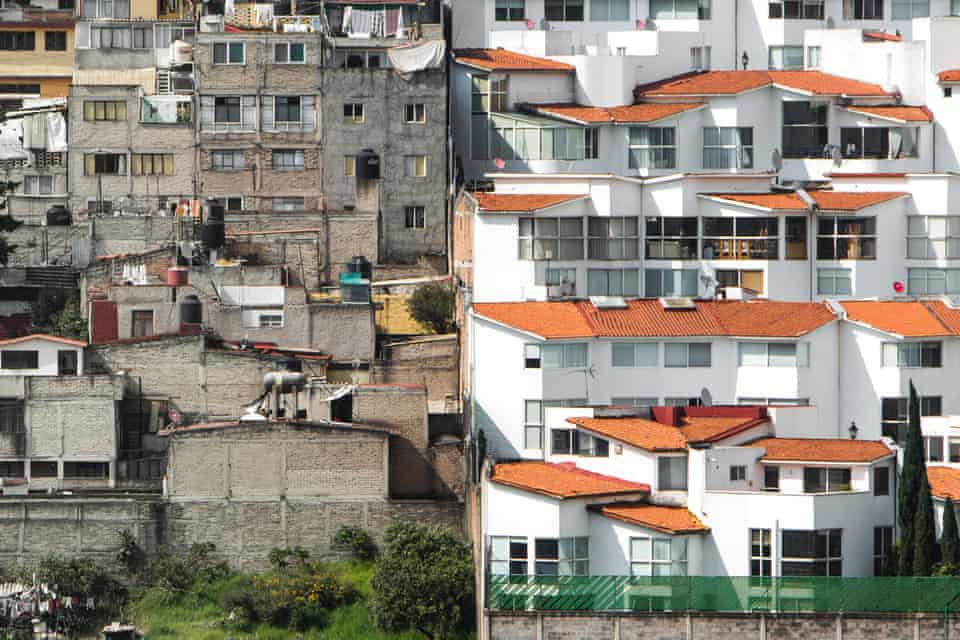
In developing countries with tourist-dependent regions, inequality may be distributed geographically as well as across classes. Tourism concentrated in certain areas often funnels vast amounts of foreign capital into them, while the rest of the country falls behind. This creates imbalances: labor-based migration increases, rural areas around these hotspots often fall into economic decline, and state priorities shift as investment convenes around the places it knows the world will see. Labor-based migration is often a precursor to inequality. Migrants often remain on the periphery of the labor force and society, while locals in these towns with preexisting capital capitalize on their willingness to accept low wages and foreigners' higher purchasing power.
Policy and Investment
This has notoriously been the case in Indonesia, with Bali, where tourism concentrates in the south, which has seen substantial tourism-based government investment, such as the Bali Mandara toll road. It opened in 2013 at a cost of approximately 2.48 trillion Indonesian rupiah, reported at the time as US$220 million, and linked Ngurah Rai International Airport with the southern areas of Benoa and the resort area of Nusa Dua, improving connections within the island’s established tourism corridor (The Jakarta Post, 2013). At the same time, the north continues to suffer from a lack of proper infrastructure and transport accessibility (Rayda, 2025). Mexico faces a similar issue in Cancun, where planned development separates the hotel-heavy coastal area from the underdeveloped rest of the city. Tourism has therefore created inequality not just between places but also in who has access to them. Locals have less beach space and fewer opportunities to access the city's substantial wealth, while mega-corporations and a select few locals benefit from foreign capital spent enjoying Cancun's natural resources (Torres & Momsen, 2005). This financial imbalance has been a major point of contention, as seen in the famous Brazilian protests of 2014 and Mexican protests of 2026, in response to massive investments in preparing the countries for the World Cup while ignoring failing healthcare systems and abject poverty (Medina, 2026; Reuters, 2014).
Countries where tourism is less concentrated in a couple of hotspots also undergo dualization through similar mechanisms, although regional administrations usually have more uniform access to capital. The issue that arises is when the government's funds become reliant on tourism, such as in the case of the Maldives, where tourism accounted for almost half of total government revenue in 2022 (World Bank, 2024), or Seychelles, where tourism and hospitality accounted for 49% of exports of goods and services in 2023 (IMF, 2024). This creates a power structure in which the bargaining power remains in the hands of the tourism market. This includes not only the Western upper-middle-class families who travel to these locations, but also the large corporations that own hotels and create jobs in these countries. Dependence becomes reliance and constrains policy, as it serves to protect that sector. Taxation, redistribution, and wage structure policies often face significant resistance from the businesses relying on the status quo. Belize illustrates how efforts to attract tourism can conflict with social policy. A 2007 study by Central Bank economists documented the expansion of the daily cruise-passenger disembarkation limit from 3,000 to 8,000 to accommodate growing arrivals, with little accompanying effort to mitigate overcrowding at tourist sites (Quan-Novelo et al., 2007). The lack of safeguards in place to manage the forthcoming increase in traffic shows how policy shifts towards the protection of certain sectors over the common good.
When government revenue and employment become reliant on tourism, reinvesting profits into tourism becomes the way to protect both. Governments therefore become incentivized to direct an increased proportion of their funds towards the tourism sector, particularly in infrastructure and services. Investment in other sectors may provide long term benefits, but they lack the short term returns governments often rely on for popularity and stability. A fall in tourism would threaten existing livelihoods and funds. Dependence therefore reinforces itself and becomes a difficult trap to overcome.
What Conditions Allow for Greater Internalization
Growth can be actively harmful, especially when dependence on it is temporary rather than an economic institution markets can rely on. Inequality may be temporary, or seen as a necessary sacrifice to achieve growth and, subsequently, development. Tourism revenues can also finance investments whose benefits extend beyond the visitor economy. In Rwanda, the Tourism Revenue Sharing Scheme funded twelve new classrooms at Gatebe Primary School in 2016 (Rwanda Environment Management Authority, 2017). In 2019, the same program supplied 729 cows to vulnerable families living around Volcanoes National Park, supporting nutrition and agricultural livelihoods (Rwanda Development Board, 2019). Such projects illustrate how institutions can channel tourism earnings into education and productive assets for residents, rather than directing all reinvestment towards attracting more visitors. In Brazil, the PRODETUR Nordeste II program, approved in 2002 with a budget of US$400 million, supported road access, sanitation and training in tourist destinations (Inter-American Development Bank, n.d.). Tourism development can attract infrastructure investment that serves both visitors and locals, while strengthening the region’s capacity to accommodate further tourism. However, this reinvestment does not necessarily reduce dependence. Where tourism is already the dominant industry, investment can remain oriented towards accommodating visitors and sustaining the sector’s competitiveness. Such spending may improve infrastructure and benefit residents, while leaving alternative sources of employment comparatively underdeveloped.

Developed countries and regions offer examples of how institutions can sustain tourism while distributing its benefits more broadly. In Graubünden, a Swiss Alpine canton, tourism generates approximately CHF 4.05 billion in gross value added, accounting for 26.5% of the cantonal economy and directly or indirectly supporting 31.3% of full-time-equivalent employment (Canton of Graubünden, 2024). These figures show reliance on tourism, even within a wealthy country. The question, then, is how this reliance is managed and who benefits from it. In Nendaz, another Swiss Alpine destination, visitor-tax revenues help finance facilities such as the swimming pool, ice rink, free shuttle buses and hiking trails (Nendaz Tourisme, n.d.). This provides a concrete example of tourism revenues supporting amenities available to residents as well as visitors. Such reinvestment does not fully eliminate the costs of tourism. Swiss authorities identify housing shortages in tourist destinations, partly linked to second homes and short-term rentals (Federal Office for Spatial Development, n.d.). It also shows that local institutions can retain a portion of visitor spending and direct it toward shared infrastructure. Tokyo offers a further example. In 2024, the city received approximately 24.8 million foreign visitors, while spending by domestic and foreign visitors combined reached around ¥9.48 trillion (Tokyo Metropolitan Government, 2025). Accommodation-tax revenues help fund measures to address litter, improve visitor services, and develop tourism personnel (Tokyo Metropolitan Government Bureau of Taxation, n.d.). These measures show how taxation can help manage tourism’s pressures while supporting the sector. These examples suggest that the way tourism contributes to living standards depends partly on the institutions that govern it. Tourism revenues and investments in shared services can spread its benefits and help address its social costs. However, financing services for residents does not mean reducing dependence on tourism. Economic diversification is still a separate challenge, as these services and the funds sustaining them may continue to rely on visitor spending.
Transition Away From Tourist Dependence
If tourist dependence can provide substantial capital and therefore the possibility to reinvest, these countries should, in the long term, be able to transition these funds into broad institutional development. Because dependence limits political sovereignty and subjects people's livelihoods to the whims of a volatile market, countries should be incentivized to make this transition.
Tourist destinations increasingly impose tourist taxes, such as in Italy and Spain's Balearic Islands. The Balearic Islands implemented a sustainable tourism tax plan in 2016, where guests aged 16 and over were charged a daily levy collected by accommodation operators, which was reduced by 50% both in low seasons and from the ninth day of their stay in the same establishment (Comunidad Autónoma de las Illes Balears, 2016). In its first year, the tax collected 30 million euros, with 80% going to investments in environmental protection and water supply (Agència d’Estratègia Turística de les Illes Balears, n.d.). The fund also explicitly incentivized longer stays, allowing for more sustained employment and greater stability.
A 2025 study by Fuster and colleagues examined project allocations in plans approved during 2016–2024 for the Balearic Islands (Fuster et al., 2025):

Since 2015, tourism in the Balearic Islands has decreased from 44.8% to 41.6% of GDP, showing a gradual but meaningful economic transition, while GDP has grown from around 28 Billion Euros to around 45 Billion Euros. This reduction in dependence needs more work. The region's economic contraction during the 2020 COVID pandemic exceeded 20%, double Spain's average, but it has seen meaningful reinvestment (Govern de les Illes Balears, 2021; Agència d’Estratègia Turística de les Illes Balears, n.d.).
Taxes aren’t the only way to carry out this transition. In the IMF’s 2003 assessment, tourism made up roughly 30% of Malta’s economy (IMF, 2003). The Maltese Central Bank’s research shows that post-2000 diversification into finance, ICT, services, and entertainment increased output and productivity and restructured labor allocation (Darmanin et al., 2021). They did this through corporate tax restructuring, political stability, and economic restructuring through licensing and regulations, creating conditions for foreign investors (Agius et al., 2024). A 2021 IMF report stated that by 2019, tourism had plunged to 16% of the Maltese economy (IMF, 2021). Malta was able to reduce their dependence while sustaining it as a reliable source of revenue.
A transition also creates logistical issues. Labor allocation is never perfectly flexible and therefore may not be achievable in short amounts of time. Labor institutions must coordinate labor efficiently so a transition outside tourism is feasible in terms of employment. Incentives add another hurdle to transitioning. As previously mentioned, the inflated capital foreigners bring is very attractive to workers; therefore, markets need to equalize across the economy in terms of compensation to make workers want to transition into other sectors. Electorally, this makes moving away from tourism challenging, as voters try to protect their precarious income and tourism-based employers lobby to maintain the status quo. Financial institutions also have an interest in tourism, as loans must be repaid and long-term investments are often made on the presumption that tourism will remain healthy and grow.
Once a dependence is established, transitioning to uniform institutional growth is difficult if the aim is to shed that reliance. Tourism sticks to economies, and the dynamics it creates offer a tandem of benefits and drawbacks that institutions must learn to channel and manage to fully internalize the benefits of tourism-based growth.
This raises the chicken-and-egg question: Does tourism dependence limit poor countries from properly developing their economy, or do countries that cannot properly develop their economy often fall into the trap of tourist dependency?
A Rightful Reaction?

Locals of tourist destinations live in economies shaped by tourism. They often earn from tourism, have access to goods and services available because of tourism, and benefit from infrastructure built for tourism. When they complain about tourism, their concern is not the money coming in, and the distaste for tourism does not come in a vacuum. Rather, their concern lies in how tourism shapes the society they live in. Inequality, dependence, economic volatility, gentrification, and the commodification of their culture are valid concerns. Governments have an obligation, through institutions and investment, to internalize and distribute the benefits of tourism growth. Through that, they may help locals, tourists, and their fractured relationships.
Bibliography
Agència d’Estratègia Turística de les Illes Balears. (n.d.). Your islands. Your holidays. Your contribution. Illes Balears. https://www.illesbalears.travel/en/illes-balears/your-islands-your-holidays-your-contribution
Agius, S., Borg, M. G., del Buono, C., Zammit, R., Cachia, M., Cauchi, I., & Fenech, G. (2024, December). Beyond GDP II: Third country nationals in Malta—Sharing in our economic future or serving labour market interests? Justice and Peace Commission. https://jp.church.mt/wp-content/uploads/2024/12/Beyond-GDP-II.pdf
Associated Press. (2025, July 16). Mexico City plans to tackle gentrification after protests against mass tourism. AP News. https://apnews.com/article/mexico-mass-tourism-gentrification-f8b0aeee11954be5004715e29fa0cf47
BPS-Statistics of Bali Province. (2021, February 5). Pertumbuhan ekonomi Bali triwulan IV-2020 [Bali’s economic growth in the fourth quarter of 2020]. https://bali.bps.go.id/id/pressrelease/2021/02/05/717583/pertumbuhan-ekonomi-bali-
Britton, S. G. (1982). The political economy of tourism in the third world. Annals of Tourism Research, 9(3), 331–358. https://doi.org/10.1016/0160-7383(82)90018-4
Canton of Graubünden. (2024, January 31). Mehr als jeder vierte Franken in Graubünden wird im Tourismus erwirtschaftet [More than one in every four francs in Graubünden is generated by tourism]. https://www.gr.ch/DE/Medien/Mitteilungen/MMStaka/2024/Seiten/2024013103.aspx
Comunidad Autónoma de las Illes Balears. (2016, March 30). Ley 2/2016, de 30 de marzo, del impuesto sobre estancias turísticas en las Illes Balears y de medidas de impulso del turismo sostenible [Law 2/2016 of March 30 on the tax on tourist stays in the Balearic Islands and measures to promote sustainable tourism]. Boletín Oficial del Estado. https://www.boe.es/buscar/act.php?id=BOE-A-2016-4175&p=20160402&tn=1
Darmanin, J., Montebello, R., & Deguara, W. (2021, July 8). The shifting structure of the Maltese economy: Evidence from chain-linked data. Mediterranean Journal of Social Sciences, 12(4), 97. https://doi.org/10.36941/mjss-2021-0031
Federal Office for Spatial Development. (n.d.). Penuria di alloggi: Le domande e risposte più importanti [Housing shortage: The most important questions and answers]. Swiss Confederation. https://www.are.admin.ch/it/penuria-alloggi
Fuster, M., Müller, N., Sard, M., & Blázquez-Salom, M. (2025, July 10). Sostenibilidad, gobernanza y turistificación. El impuesto de turismo sostenible de las Islas Baleares (ITS-IB) [Sustainability, governance, and touristification: The Balearic Islands Sustainable Tourism Tax (ITS-IB)]. Estudios Turísticos, 229, 17–30. https://doi.org/10.61520/et.2292025.1231
Garcia-López, M.-À., Jofre-Monseny, J., Martínez-Mazza, R., & Segú, M. (2020). Do short-term rental platforms affect housing markets? Evidence from Airbnb in Barcelona. Journal of Urban Economics, 119, Article 103278. https://doi.org/10.1016/j.jue.2020.103278
Ghalia, T., & Fidrmuc, J. (2018). The curse of tourism? Journal of Hospitality & Tourism Research, 42(6), 979–996. https://doi.org/10.1177/1096348015619414
Govern de les Illes Balears. (2021, March 16). Las consecuencias derivadas de la pandemia causan una caída del PIB del 23,7% al conjunto de las Islas Baleares en el 2020 [The consequences of the pandemic cause GDP to fall by 23.7% across the Balearic Islands in 2020]. https://www.caib.es/pidip2front/jsp/es/ficha-convocatoria/9682080
Govern de les Illes Balears. (2022, April 1). Las Islas Baleares cerraron 2021 con una recuperación del 60% del PIB turístico [The Balearic Islands ended 2021 having recovered 60% of tourism GDP]. https://www.caib.es/pidip2front/jsp/es/ficha-convocatoria/las-islas-baleares-cerraron-2021-con-una-recuperacioacuten-del-60-del-pib-turiacutestico
Government of Thailand. (n.d.). Thailand proposes new THB450 (~US$13.50) tourism fee for all foreign visitors. Thailand.go.th. https://thailand.go.th/public/issue-focus-detail/thailand-proposes-new-thb450-us1350-tourism-fee-for-all-foreign-visitors
Inter-American Development Bank. (n.d.). Prodetur II Northeast Region (BR0323). https://www.iadb.org/en/project/BR0323
International Labour Organization. (n.d.). Tourism, hotel and food & beverage services. https://www.ilo.org/topics-and-sectors/industries-and-sectors/tourism-hotel-and-food-beverage-services
International Monetary Fund. (2003). Public information notice: IMF concludes 2003 Article IV consultation with Malta. https://www.imf.org/en/news/articles/2015/09/28/04/53/pn03108
International Monetary Fund. (2017). Turkey: Selected issues. IMF Country Report No. 17/33. https://www.elibrary.imf.org/view/journals/002/2017/033/article-A002-en.xml
International Monetary Fund. (2021). Malta: 2021 Article IV consultation—Press release; staff report; and statement by the executive director for Malta. IMF Country Report No. 21/211. https://www.elibrary.imf.org/view/journals/002/2021/211/article-A001-en.xml
International Monetary Fund. (2023). Maldives: 2022 Article IV consultation—Press release; staff report; and statement by the executive director for Maldives. IMF Country Report No. 23/366. https://www.elibrary.imf.org/view/journals/002/2023/366/article-A001-en.xml
International Monetary Fund. (2024). Seychelles: 2024 Article IV consultation, second reviews under the arrangement under the Extended Fund Facility and the arrangement under the Resilience and Sustainability Facility, requests for a waiver of nonobservance and modification of performance criteria—Press release; staff report; and statement by the executive director for Seychelles. IMF Country Report No. 24/191. https://www.elibrary.imf.org/view/journals/002/2024/191/article-A001-en.xml
Jackman, M. (2014). Output volatility and tourism specialization in small island developing states. Tourism Economics, 20(3), 527–544. https://doi.org/10.5367/te.2013.0289
Jayasekera, S. A. (2018, January 3). ‘Foreigners only’ hotels to be prosecuted. Daily Mirror. https://www.dailymirror.lk/Breaking-News/Foreigners-Only-hotels-to-be-prosecuted/108-143245
LPEM FEB UI. (2026). Indonesia economic outlook Q1-2026: Kerentanan dari dalam [Vulnerability from within]. Universitas Indonesia. https://lpem.org/?download_id=20821&sdm_process_download=1
Maldives Bureau of Statistics. (2024). Employment in tourist resorts—2022. https://statisticsmaldives.gov.mv/mbs/wp-content/uploads/2024/09/EmploymentInResorts2022.pdf
Medina, A. (2026, March 28). Soccer—Mexican protesters turn highway into football pitch to slam World Cup ‘dispossession’. Reuters. Investing.com. https://www.investing.com/news/world-news/soccermexican-protesters-turn-highway-into-football-pitch-to-slam-world-cup-dispossession-4586556
Munguía, A. (2026, March 24). Violencia en Jalisco deja pérdida de 683 mdp al turismo [Violence in Jalisco causes tourism losses of 683 million pesos]. El Financiero. https://www.elfinanciero.com.mx/empresas/2026/03/25/violencia-en-jalisco-deja-perdida-de-683-mdp-al-turismo/
Narottama, N. (2025, October 4). Breaking down thick walls: Expat-local capital conversion and community integration in sustainable tourism development in Bali. In P. D. S. Pitanatri & A. Hassan (Eds.), Handbook of sustainability in tourism and hospitality in Indonesia (pp. 35–54). Springer. https://doi.org/10.1007/978-981-96-3379-1_2
Nendaz Tourisme. (n.d.). Visitors’ tax. https://www.nendaz.ch/en/A2077/visitors-tax
Nisbett, M. (2017). Empowering the empowered? Slum tourism and the depoliticization of poverty. Geoforum, 85, 37–45. https://doi.org/10.1016/j.geoforum.2017.07.007
OECD. (2023). Rethinking regional attractiveness in the Balearic Islands region of Spain. OECD Publishing. https://www.oecd.org/content/dam/oecd/en/publications/reports/2023/05/rethinking-regional-attractiveness-in-the-balearic-islands-region-of-spain_9a726ecf/47bf5ec1-en.pdf
Quan-Novelo, A., Santoya, J., & Vellos, R. (2007, November). Assessing the direct economic impact of cruise tourism on the Belizean economy. Central Bank of Belize. https://cert-net.com/files/publications/conference/953.pdf
Rayda, N. (2025, February 20). IN FOCUS: Overcrowded south, undeveloped north—Bali seeks new airport, highways and rail lines despite roadblocks. CNA. https://www.channelnewsasia.com/asia/indonesia-north-bali-new-airport-infrastructure-projects-tourism-4942186
Reuters. (2014, May 16). Brazilians protest World Cup spending, call for better services. SBS News. https://www.sbs.com.au/news/article/brazilians-protest-world-cup-spending-call-for-better-services/lyuo3psvf
Reuters. (2024, July 11). Spain’s tourism minister condemns spraying of Barcelona visitors with water pistols. KELO-AM. https://kelo.com/2024/07/11/spains-tourism-minister-condemns-spraying-of-barcelona-visitors-with-water-pistols/
Rwanda Development Board. (2019, August 23). RDB hands over 729 cows to vulnerable families living around Volcanoes National Park. https://rdb.rw/rdb-hands-over-729-cows-to-vulnerable-families-living-around-volcanoes-national-park/
Rwanda Environment Management Authority. (2017). Rwanda state of environment and outlook report 2017. https://www.rema.gov.rw/fileadmin/user_upload/REMA/Publications/State_of_Environment___Atlas/Rwanda_State_of_Environment_Report_2017.pdf
Scheyvens, R. (2011). Tourism and poverty. Routledge. https://www.routledge.com/Tourism-and-Poverty/Scheyvens/p/book/9780203831595
Sen, A. (1999). Development as freedom. Alfred A. Knopf. https://sen.scholars.harvard.edu/publications/development-freedom
Sequeira, T. N., & Nunes, P. M. (2008). Does tourism influence economic growth? A dynamic panel data approach. Applied Economics, 40(18), 2431–2441. https://doi.org/10.1080/00036840600949520
Sharma, S. (2024, February 29). Russian ‘whites only’ party in Sri Lanka sparks diplomatic tensions. The Independent. https://www.the-independent.com/asia/south-asia/russians-white-only-party-sri-lanks-b2503781.html
Sri Lanka Tourism Development Authority. (n.d.). Notice to all tourism service providers: Ensuring equal treatment for all tourists (international & domestic). https://sltda.gov.lk/en/important-notices
The Jakarta Post. (2013, September 23). Yudhoyono to officially open Bali’s first toll road. https://www.thejakartapost.com/news/2013/09/23/yudhoyono-officially-open-bali-s-first-toll-road
Tokyo Metropolitan Government. (2025, June 13). 2024年訪都旅行者数等の実態調査結果 外国人旅行者は過去最高の約2,479万人 [Results of the 2024 survey of visitors to Tokyo: Foreign visitors reach a record approximately 24.79 million]. https://www.metro.tokyo.lg.jp/information/press/2025/06/2025061303
Tokyo Metropolitan Government Bureau of Taxation. (n.d.). 宿泊税の使途 [Uses of accommodation-tax revenue]. https://www.tax.metro.tokyo.lg.jp/kazei/leisure/shuk/shuk_use
Torres, R. M., & Momsen, J. D. (2005). Gringolandia: The construction of a new tourist space in Mexico. Annals of the Association of American Geographers, 95(2), 314–335. https://doi.org/10.1111/j.1467-8306.2005.00462.x
World Bank. (2024, June). Maldives country climate and development report. https://documents1.worldbank.org/curated/en/099062724090023235/pdf/P18052914ffd310d61afc01156a20523b73.pdf
The Star (9 October, 2023). Fed up with mass tourism, Barcelona locals say, 'Tourists go home!'. https://www.thestar.com.my/lifestyle/travel/2023/10/09/fed-up-with-mass-tourism-barcelona-locals-say-039tourists-go-home039
Unsplash (2019), Chenjilian https://unsplash.com/ja/%E5%86%99%E7%9C%9F/%E3%83%94%E3%83%B3%E3%82%AF%E3%81%A8%E7%99%BD%E3%81%AE%E9%A3%B2%E6%96%99%E8%87%AA%E5%8B%95%E8%B2%A9%E5%A3%B2%E6%A9%9F-c5oD3OmSaTg
NPR (February 2026), AP, A day after the Mexican military killed a drug lord, security forces keep up fight with cartel https://www.npr.org/2026/02/23/g-s1-111138/mexico-fears-more-violence-after-army-kills-leader-of-powerful-jalisco-cartel
The Guardian, Oscar Lopes (March 2026), ‘Unbelievably unequal’: report shows how 1% of Mexicans own 40% of country’s wealth https://www.theguardian.com/world/2026/mar/12/mexico-city-neighborhoods-inequality
The Newtimes (August 2026), John Mbaraga, RDB constructs classrooms for schools around Akagera National Park https://www.newtimes.co.rw/article/132434/News/rdb-constructs-classrooms-for-schools-around-akagera-national-park
The Mirror (October 2024), William Morgan, https://www.mirror.co.uk/travel/news/brit-holidaymakers-warned-spanish-protests-33883958


Comments