


In The Midst of a Facade

The role of political parties in Ethiopia’s authoritarian system
The Ethiopian general election, held on the 1st of June, failed to meet a number of basic standards for a competitive democratic election according to most international observers. With fractured security, particularly in the Amhara and Tigray regions, as well as a lack of institutional capacity, organising truly representative national elections has been difficult. Furthermore, the authoritarian methods utilised by incumbent Prime Minister Abiy Ahmed, who has been in power since his election in 2018, have significantly limited the space for opposition candidates. Therefore, the election has been widely described as a facade, generating little genuine attention from either foreign or domestic observers.
Although results from all constituencies may not yet be available, the Ahmed-led Prosperity Party will almost certainly continue to maintain complete control over the Ethiopian parliament. Wielding this power, it is likely that Abiy Ahmed will continue implementing his agenda unimpeded, specifically in terms of the re-integration of the rebellious Tigray province and further stimulating Ethiopia’s economic development.
From this perspective, the general election can be viewed as a tool for popular legitimation and the provision of passive consent for Ahmed’s governance program. Yet, although such a framework certainly has validity, the lack of any credible opposition entities being allowed into the national electoral landscape is indicative that this was not the primary aim of the incumbent government. Simultaneously, Ethiopia's constitutional system precludes a view of the general elections as a routine exercise of constitutional duty driven more so by bureaucratic inertia, rather than political necessity. As a parliamentary republic, the election of the parliament as a collective institution- in effect, the renewal of its mandate- represents a politically significant moment which is inherently alien to the personalist mode of authoritarianism which precedes the routinisation of legislative elections.
Whatever extra-institutional power Abiy Ahmed may hold as a leader, he is ultimately constrained to act through political parties to gain institutional legitimacy, as a parliamentary system becomes overwhelmingly difficult to navigate and manage without their existence. This, therefore, centers the political party and gives it a unique relevance that is absent in other authoritarian systems. Specifically, Ethiopia under Abiy Ahmed serves as an important example of the function that political parties can play in defining the boundaries of political discourse and mediating the state-citizen relationship. However, to understand the function of the Prosperity Party, its political affiliates, as well as its opponents in the current landscape; it is important to examine the evolution of political party formations in Ethiopia both as vehicles for state or elite actions and the representation of social grievances.

Toward a Modern Ethiopia
Being considered one of the oldest existing civilisations on earth, Ethiopia has managed to preserve its culture and traditional customs for over 2000 years. Famously, it is also considered one of the two African countries, along with Liberia, to have never undergone a prolonged period of colonisation by European powers. Despite this, the history of the Ethiopian nation-state can generally be traced to the late 19th century, particularly the rule of Emperor Menelik II.
Prior to the reign of Menelik the II, the area ruled by the Ethiopian Kings was concentrated in the north-west of contemporary Ethiopia, constituting the modern regions of Tigray and Amhara. The area was ruled primarily by aristocrats, operating under a quasi-feudal system wherein the majority of the population was relegated to the position of peasant serfs. Although attempts at modernization had been made by rulers such as Tewodoros II, they ultimately proved unsuccessful due to both elite resistance and a lack of domestic state capacity.
Menelik II is widely attributed with catalysing the transformation of Ethiopia into a modern state, characterised by the presence of a centralised bureaucracy and a competent standing army able to prevent European invasion. Perhaps Menelik II’s most significant decision, however, was the conquest of the various polities which neighboured the historical territory of the Ethiopian Empire. Through this military expansion, Menelik did not only define the territorial space occupied by the Ethiopian nation-state, but created the core social cleavages which would serve to catalyse political mobilisation.
Although the conquest was legitimated through the concept of re-unifying a historically cohesive Ethiopian community, defined by loyalty to the Ethiopian Emperors and the Orthodox Church, this legacy is greatly contested in the areas affected. As argued by Oromo historians, such as Mohammed Hassen, the process replicated colonial dynamics similar to those perpetuated by European powers. Particularly, the Solomonic dynasty has been considered to have favoured the nobility in the northern highland regions in both the distribution of newly conquered land and positions within the growing state bureaucracy. Additionally, the post-conquest economic systems imposed on the new subjects were often heavily extractive, leading to cycles of peasant rebellion and suppressive, arbitrary state-organised violence. In effect, the conquest initiated by Menelik II created a core-periphery cleavage, which identified the primarily northern highland Christian nobility as an in-group, while other ethnic groups remained excluded, particularly the Oromo people which constituted the largest ethnic group in the new boundaries of the Ethiopian Empire.

Yet, political tensions were not exclusively caused by territorial expansion. Menelik’s state reforms provoked tensions with both the aristocracy and the church, as they promised to potentially weaken the basis of their political power. In fact, the conquest of new territories can in part be understood within the context of providing both socio-political classes with an incentive to support Menelik’s governance agenda, by providing new sources of revenue for aristocrats and framing the wars in the language of Christian expansionism. Although Menelik’s conquests tempered the concern of the nobility and clergy, the two socio-political classes remained potential sources of discontent and championed a conservative political identity which opposed state modernisation. In part to lessen the influence of both groups, Menelik moved the capital of the Ethiopian Empire from its traditional heartland in the northern highland to the newly constructed Addis Ababa. The move of the capital could have been leveraged for the future creation of a bureaucratic class whose political identity was centered on loyalty to the Solomonic dynasty and the state. In theory, this socio-economic class could have served as the basis for the formation of a mass pan-Ethiopian national identity. Yet, surrounded by ethnically Oromo areas, the move of the capital created new risks for the Emperor in the case of rebellion and contributed to the dissipation of the loyalty of northern highland aristocrats, precipitating the emergence of a localist political conscience.
However, these emerging cleavages and politicised social identities did not precipitate the immediate formation of political parties. Instead, political discontent with the rule of the Ethiopian Emperors during the late 19th and early 20th century continued to be channeled through the traditional methods of political expression. For the peasantry, which constituted the majority of Ethiopia’s population, this meant focusing primarily on resolving local grievances, often through reliance on kinship or quasi-feudal patronage based systems. At times, local disputes led to revolts, especially in peripheral areas, which, although defeated by the state, contributed to continued militancy in the form of raiding parties or other non-state armed groups.
The aristocracy, meanwhile, primarily looked to exert influence through court politics and leveraging their existing resources to be included within the imperial state. These tendencies were particularly prominent between the stroke of Emperor Menelik II in 1906 and the formal ascension of Emperor Haile Selassie in 1930, which can be described, at least partially, as a period of renewed aristocratic influence. In particular, the deposition of the uncrowned Emperor Lij Iyasu in 1916, due to a combination of his alleged sympathy for Islam which threatened to undermine ecclesiastical authority and his tacit support for anti-feudal reforms signalled the continued strength wielded by both socio-political classes without formal political organisation.
Haile Selassie, who had been selected as the regent of Ethiopia after the deposition of Lij Iyasu, had to contend with the prominence of conservative aristocratic factions. While he ultimately weathered the most aggressive challenge to his rule by elements of said faction during the defeat of the 1928 coup, the nobility continued to remain politically powerful. This is specifically acknowledged by the legislative structure created by the 1931 constitution, which granted nobles and tribal chieftains the ability to elect the lower house of the newly established parliament on behalf of the populace. Beyond being a recognition of their continued importance to the Emperor’s political power, it further served to re-entrench a quasi-feudal notion of political representation which was based on an assumed linkage of the political interest of the peasant and aristocrat.
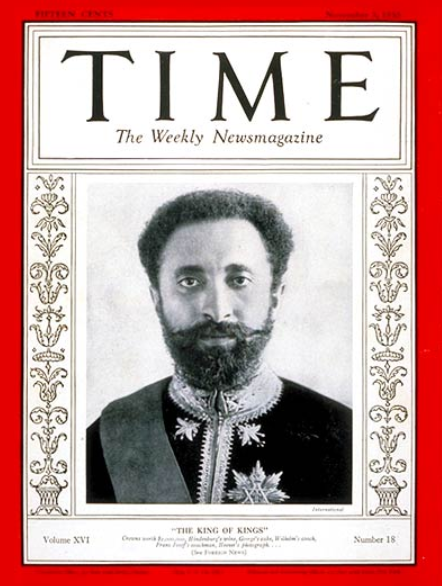
In a comparative perspective, Ethiopia’s lack of formal political organisations is not unusual. Historically, neither the aristocracy, nor the peasantry were a catalyst for the formation of political parties. The peasantry in the Ethiopian case in particular, due to both its wide dispersion and low literacy rate, was often more attached to local or religious identities, precluding the complexity involved in the formation of political parties. Meanwhile, for the aristocracy, engagement in politics outside traditionally designated spaces would undermine their source of power. Ultimately, the socio-economic classes which have played the most important role in early political party formation in the European context- the intelligentsia, the national bourgeoisie and the industrial proletariat- remained too fragmented and minor to catalyse those processes in Ethiopia. More importantly, the Ethiopian intellectual and bourgeois class, which did arise in the early 20th century, found its political interests in alignment with the state expansion program promised by leaders such as Haile Selassie. This early alignment can be particularly understood through examining the ideas of Ethiopian intellectual Gebrehiwot Baykedagn, who advocated for protectionist economic measures coupled with state centralisation as a means for the modernisation of Ethiopia.
Yet, it would be invalid to state that no attempts at political organisation took place in Ethiopia during the early 20th century. Particularly, the fear of Italian expansionism in the late 1920s and early 1930s contributed to the formation of organisations such as the Ethiopian Patriotic Association, predominantly composed of Ethiopian intellectuals. While such organisations operated firmly within the space legally delineated to them, they still constituted an attempt toward the political mobilisation of a pan-Ethiopian nationalism and the first efforts by the intelligentsia to pursue a role in influencing state policy.
In fact, the previously discussed 1931 constitution promulgated by Emperor Haile Selassie shortly after his formal coronation, can be understood within this context. While it is generally acknowledged that there was little domestic pressure for the adoption of a constitution, which in itself is reflected in the preservation of absolute monarchical power; the constitution can, to some extent, be viewed as a pre-emptive decision meant to satisfy an increasingly active, but fragmented, community of Ethiopian intellectuals. Additionally, the 1931 constitution aimed to consolidate the creation of an Ethiopian national identity, even if at first limited to the political elite, by creating an institutional setting for elite mixing and cooperation.
Communism, Nationalism or Dissolution?
One of the most tumultuous, and profoundly transformative periods in Ethiopia’s modern history came after the beginning of the Italian invasion in 1935. The invasion, coupled with the subsequent occupation of Ethiopia until 1941, was accompanied by severe repression against the Ethiopian population by the Italian colonial administration, as well as the disruption of existing social, political and economic systems. Importantly, the invasion and occupation created the conditions for the first major attempts at mass political organisations in the Ethiopian national context.

Despite the defeat of the Ethiopian army in 1936, the soldiers who had participated in fighting returned to their home villages, where they were re-organised by local commanders into guerilla fighter squads to harass the Italian occupying forces. These squads, although often under the direction of local commanders, did show a propensity toward political organisation. This is most acutely demonstrated by the Black Lions Organisation, a militarised group composed primarily of intellectuals which explicitly defined itself as political and aimed to unify the Ethiopian anti-Italian resistance. The insurgency efforts were suppressed by severe Italian reprisals, targeting in particular the Ethiopian Orthodox Church which became a major organisational force of anti-Italian resistance. These reprisals led to the formation of a common resistance narrative which helped cohere a pan-Ethiopian national identity in the face of foreign occupation.
However, opposition to the occupation can not be considered universal: promises of re-establishing local autonomy led the Italian colonial administration to garner some support among the Muslim population of the southern lowlands and Oromo areas in the south eastern highlands. Additionally, powerful rivals of Haile Selassie within the nobility similarly collaborated with the Italians in the hope of re-establishing their power independent of the imperial state. Both groups of collaborators experienced negative consequences after the restoration of the Ethiopian Empire in 1941. In particular, the Muslim population of the lowlands and Oromo population were excluded from the common narrative of war-time resistance which reduced their ability to integrate into the Ethiopian national identity. Simultaneously, the defeat of the Italians led to an entrenching of Haile Selassie’s power, seriously weakening the political power of the nobility which the collaborators had sought to preserve.
Therefore, the immediate post-war years were characterised by a set of political, economic and social reforms aimed at finalising the transition of Ethiopia from quasi-feudalism to a modern nation-state. These reforms were hindered by the heavy losses suffered by the Ethiopian intellectual class during the Italian occupation, caused by their heavy mobilisation in support of the resistance movement, as well as the targeted actions taken against them by occupation forces. This precipitated an expansion and greater centralisation of education, meant to provide the cadres necessary for the advanced state bureaucracy envisioned by Emperor Haile Selassie.
The domestic reforms pursued by Emperor Haile Selassie were complemented by an attempt to increase Ethiopia’s international standing. Ethiopia formally abolished slavery in 1942 and became one of the founding members of the United Nations, guaranteeing it international recognition. Regionally, Ethiopia looked to exert influence over the formerly Italian colony of Eritrea, as well as restore control over the province of Ogaden, both of which were administered by the British Empire in the immediate aftermath of WWII.
It is in Eritrea that the Ethiopian state first formally encountered partisan politics. After the defeat of Italian forces in east Africa, the status of the colony remained unresolved, with Ethiopia lobbying for unification based on historical territorial claims and the access to the sea. However, the views of local Eritreans remained mixed: while union with Ethiopia was supported by parts of the Orthodox Christian population, other social and economic groups supported independence. These divisions contributed to the formation of political parties, including the pro-Ethiopian Unionist Party. Thus the Ethiopian government was forced to act through, and in cooperation with, a political party to achieve their common objective of unification.
The relationship between the Ethiopian government and the Unionist Party was complex. Although Ethiopia issued support, including funding, the sending of agents, and even arms, it found itself unable to genuinely contribute to partisan politics. This is evidenced by the fact that although the Unionist Party did ultimately gain a plurality in the 1952 legislative election, this victory has been primarily ascribed to genuine support among the Orthodox Christian population, and fragmentation among separatist political parties.

In 1952, the federation of Eritrea and Ethiopia was achieved by means of an internationally backed constitutional settlement, which promised wide-ranging autonomy to the Eritrean regional government. Yet, almost immediately the Ethiopian government attempted to encroach on Eritrea’s autonomy, which included an attempt to curtail local opposition parties. This development is unsurprising given that in Ethiopia political parties remained banned, therefore creating a fear that the Eritrean political parties could generate a “spill-over” effect that would impact Ethiopia. Additionally, the Ethiopian imperial government had no experience with the dynamics of electoral party politics, making a default to traditional authoritarian methods of rule less dangerous compared to the alternative of tolerating local party activism.
In this process, the role of the Unionist Party was not relegated to that of a local enforcer. Rather it was meant to maintain and encourage support for the government’s actions within its predominantly Christian base. In particular, the Unionist Party was perceived as a mobilising force for the promotion of Ethiopian national identity, being important in the eventual aim of Emperor Haile Selassie for the complete integration of Eritrea. Yet, activity through the Unionist Party further carried political risks, as it excluded certain groups, in particular the Muslims who had political parties of their own. Thus, for the decade-long period of federation the Unionist Party can be considered a first attempt by the Ethiopian state to manage social grievances through political organisation and the encouragement of political identity formation meant to provide the state with durable political support.
It would however be erroneous to view the Ethiopian policy toward Eritrea as entirely based on repression and local political engineering. In fact, the revised 1955 constitution was created in part to accommodate Eritrea’s institutional architecture by expanding suffrage for the lower chamber of the Ethiopian parliament, previously reserved only for certain socio-political classes. Still, the repressive actions of the state restricted the space for legal political organisation in Eritrea, contributing to the rise of clandestine militant groups, such as the Eritrean Liberation Front. In 1962, the autonomy of Eritrea was formally abolished, leading to the formal end of the brief period of partisan politics within the Ethiopian Empire.
Despite the government’s fears of the potential extension of political organisation from Eritrea into Ethiopia, the 1950s remained subdued in terms of political party formation. The first legislative elections following the implementation of the 1955 constitution, which, beyond extending the right to vote, expanded the role of parliament, were not accompanied with serious attempts at national political mobilisation. To a large degree, the election of MPs was determined by competition between local patronage networks, themselves typically controlled by local nobles or elites. Therefore, the new parliament in effect differed little from the previous legislature appointed by the nobility.
However, the reforms pursued by Emperor Haile Selassie, of which the new constitution was only part, proved to be a powerful catalyst for the formation of political parties. In particular, the move to centralisation, the impact of increased literacy and the professionalisation of the military can all be briefly examined as enabling political mobilisation based on cross-class cleavages.
Perhaps the most potent cleavage in encouraging political activation was the centralisation of the state and expansion of monarchical power, especially after the 1955 constitution. These reforms threatened the historical power of the nobility and local elites, whose position would be sidelined in favour of centrally appointed bureaucrats. Additionally, the decision to standardise taxes, and an attempt to increase the tax on land ownership, was met with serious resistance from nobles in a number of regions. This included regions such as Tigray and Amhara which composed the traditional “northern heartland” of the Ethiopian Empire, and historically had been the Emperor’s primary base of support.
Discontent with centralisation was not limited to the nobility, but extended toward the peasantry. Specifically, the economic costs created by increased taxation were often borne by the peasantry in the form of increased rents, while living standards remained low. Meanwhile, social policies including the aggressive promotion of Amharic as the country’s sole language further alienated the peasantry from historically marginalized areas. In effect, both the peasants and nobility felt their political interests were excluded from within the modern state, generating the potential for temporary political alignment and organisation.
This dynamic was felt most sharply in peripheral areas of the Ethiopian Empire, where the local elite was historically less integrated into imperial power structures. In particular, this can be observed in the Somali-majority province of Ogaden, where taxation and cultural assimilation policies combined to catalyse a significant insurgency in 1963, known as the Nasrallah rebellion. The uprising involved both local peasantry and clan leaders, demonstrating how shared cleavages contributed to political activation. While the rebellion didn’t initially organise itself as a political party, after being defeated, it sought to re-organise itself to emphasise its political function, eventually forming the Western Somali Liberation Front (WSLF) in 1969.
A similar tendency toward mobilisation can be observed within Oromo-majority areas. In 1960, the Mecha and Tulama Self-Help Association was founded to preserve Oromo cultural identity and advocate for their economic interests. The association exemplified a similar pattern of being led by local elites, but receiving broad support from Oromo peasants. Therefore, although the aims of the association were socio-economic rather than political, it was repressed by the Ethiopian government in 1968. Instead of contributing to pacification, repression led to the formation of more explicitly political and militant organisations, such as the Ethiopian National Liberation Front, by Oromo refugees.

The increasing political organisation of the peasantry and nobility was not inherently dangerous to the regime's survival. By increasingly relying on the national bourgeoisie, the civil service and the military, Emperor Haile Selassie looked to build a new base of support for the regime. However, the expanding reliance on these socio-economic groups created new challenges for the government.
Firstly, the expansion of the civil service precipitated the opening of higher education institutions. These institutions turned into spaces for public discourse and criticism of the perceived “backwardness” of Ethiopia relative to other African countries. Additionally, despite state expansion, positions often continued to be given through patronage networks, thus excluding a substantial group of well educated citizens from full participation. This atmosphere culminated in the Ethiopian Student Movement, which involved predominantly Marxist-Leninist students organising protests and other actions against the Imperial government. Students forced into exile founded political parties, including the Ethiopian People's Revolutionary Party (EPRP) and the All-Ethiopia Socialist Movement (MEISON), which became the first attempts at pan-Ethiopian political party formation. While the political parties created proved relatively ineffective at garnering mass support, they proved important as organising nodes for student activism during the early 1970s.
The turn of the student movement toward Communism, and its key role as a driver of political party formation can be understood through a range of factors. From an ideological perspective, Marxism-Leninism and Maoism offered a workable alternative model to Ethiopia’s capitalist development, due to their emphasis on the importance of the peasantry and the promise of rapid economic growth. From a socio-economic perspective, it can be emphasised that the background of the students, and their particular grievances with the incumbent regime, were best served by the ideological framework provided by Marxism-Leninism. Most Ethiopian university students were related in some way to local elites, and thus were often sympathetic to their ethnic or local identities. Simultaneously, their education had “uprooted” them from exclusive affiliation with their patrimonial identity and built a relatively stronger sense of pan-Ethiopian nationalism. Marxism enabled the students to continue supporting local self-determination struggles, while simultaneously arguing that the preservation of a united Ethiopia was ultimately possible through systemic reforms. Ultimately, the Marxist affiliation of student organisations prevented the possibility for political reliance on the civil service in the long-run and created the first pan-Ethiopian political parties.
However, the influence of Marxism-Leninism was not merely limited to the civil service, but also the military. As the military professionalised, with the Emperor looking to rely on a trained standing army instead of local levies provided by nobles, the officer corps expanded substantially. Arguably, the officer corps was the group most prone toward political organisation: receiving extensive training and exposure to the external world, officers were often the most acutely aware about state corruption, and most afflicted by patronage networks preventing internal mobility. Furthermore, officer organisation was encouraged by dynamics in neighbouring states, where reformist leaders such as Gamal Abdel Nasser in Egypt and Ibrahim Aboud in Sudan had risen from within the military.
Moreover, officerial organisations often had a quasi-blanquist organisational approach, which included a distrust of civilian institutions and a propensity toward independent actions. This is best reflected in the failed 1960 coup d’etat, which was organised by elements of the Emperor’s royal guard. Despite the efforts of the putschists to garner popular support through radio broadcasts, without an organisational network their reach ultimately proved limited and they were promptly defeated by loyalist forces. The legacy of the coup disincentivised the military from further attempts at independent organisation, both due to its ultimate failure, as well as the increased reliance of Emperor Haile Selassie on their support which allowed them to implement their preferred policies without the risks involved in a coup. Yet, it was demonstrative of the political impact that even a small organisation within the officer corps could wield.
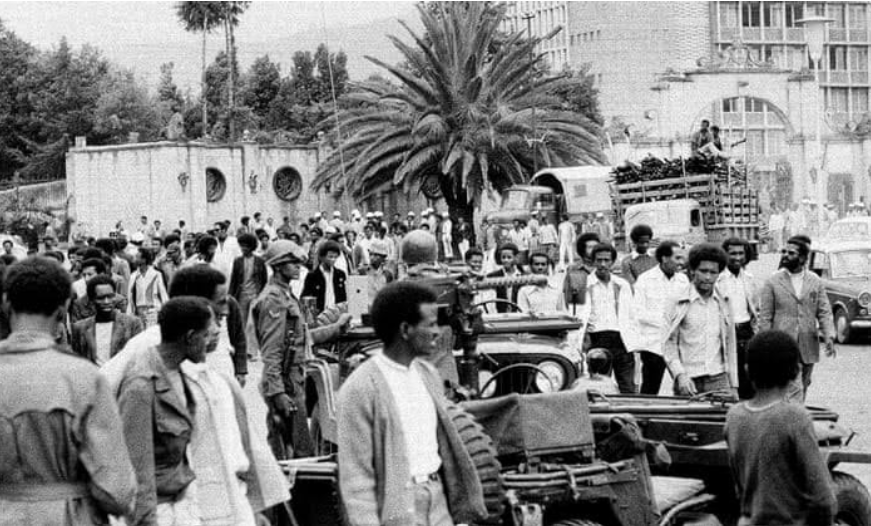
In sum, by the early 1970s, four general dynamics could be observed in regards to political party formation in the Ethiopian Empire. Firstly, there were political parties originating from ideological mobilisation, such the EPRP and MEISON. These parties, although limited in organisational reach, were the most cohesive in their aims and resembled most closely the traditional conception of a political party. That is, that the political party constitutes the center of all political activity emanating from itself. Secondly were the political parties arising as spaces for organisational mediation, such as the WSLF or the Oromo Liberation Front. Both organisations served as spaces for the legitimation of the insurgency ongoing against the Ethiopian state and the clearer delineation of internal authority. Thirdly, the formation of informal political associations within the officer corp constituted a rudimentary form of political organisation which aimed to seize state power both as a means to achieve its program and as the source of its popular legitimation. Finally, there were attempts to utilise existing political parties to legitimate the state's actions and organise its supporters, as seen in the context of the Unionist Party activity in Eritrea.
Curiously, it can be observed that neither the national bourgeoisie, nor the urban proletariat have at this point looked to organise independently of existing power structures. For both, this is largely predicted by their relative weakness compared to other social classes, as well as the fragmented nature of their activity. Additionally, it can be argued that their political interests remained to a large degree aligned with Emperor Haile Selassie’s program of state modernisation, in particular through subsidies and protection for domestic industries.
Revolution and Repression
In September, 1974, а council of military officers, known as the Derg, formally placed the Emperor of Ethiopia, Haile Selassie under house arrest. The event marked the culmination of the Ethiopian Revolution, which had started after groups of soldiers began to mutiny due to poor conditions in January of 1974. As had been previously discussed, the Ethiopian Revolution was not a sudden event, but rather constituted an explosion of social frustration which had previously simmered under the surface. The revolution was accompanied by local rebellions, student demonstrations, as well as burgeoning labour militancy. However, the true pace-setters proved to be the military, particularly the officer corps, who had gradually taken over de facto control of the state by leveraging Haile Selassie’s weaknesses. Following Selassie’s formal deposition, the military further occupied de jure power. Yet, despite the broadly reformist agenda of the Derg’s leader, the ideological commitments of its leadership remained fragmented and no political organisation had been created to mobilise support.
The events following the immediate deposition of Haile Selassie offer a fascinating insight into political party formation and activity during periods of sudden political liberalisation. Although the state remained authoritarian, the disorder surrounding the transition and the elite fractures associated with it created an unprecedented opening for political activation in Ethiopia. This was leveraged by the previously primarily exile-based political parties such as the EPRP and MEISON to expand their operations in Ethiopia, attempting to gain the support of various social groups. Meanwhile, conservatives and monarchists opposed to the new military government formed their own political organisation, known as the Ethiopian Democratic Union. The EDU was the first formal party which looked to represent the cleavages of the local elites, which in the aftermath of the revolution had lost access to state power.
Ultimately the Marxist-Lenist faction within the Derg, which came to be led by Mengistu Haile Mariam, managed to consolidate power by March, 1975. This was achieved both through active suppression of opponents, including members of the royal family as well as rival generals, along with new communications of state policy which declared socialism the new Ethiopian ideology and formally proclaimed Ethiopia a republic. However, the Derg lacked the formal political structures necessary to legitimise itself and precipitate popular mobilisation in its support. This challenge led to a bi-furcated attempt by the Derg at party engineering, which included both an attempt to construct state institutions which performed the same function as that of a traditional political party, and the use of existing political formations on the communist left as proxies.

In the first instance, an institution named the Provisional Office for Mass Organisational Matters was created by decree in December, 1975. The newly created body functioned as a department of the government and was tasked with mobilising support for state actions, specifically after the publication of the Derg’s key ideological document, the National Democratic Revolutionary Program, in April 1976. The institution was however primarily judged as ineffective by contemporaries, as state control restricted the activities that could be meaningfully conducted by it. Additionally, in creating the department the military leadership was forced to rely on recruiting party activists from existing Marxist-Lenist parties such as MEISON and the Waz League, which created political liabilities for a state leadership weary of over-reliance.
This logic dictated the relationship between the Derg government and existing political organisations. While the new military government was naturally antagonistic toward both conservative and ethnic separatist political organisations, their relationship with the previously discussed Marxist-Leninist parties was equally complex. In theory, the new government had arisen from an opportunistic military action, contrary to the Marxist theory of popular seizure of power through political mobilisation. Yet, simultaneously, the declared loyalty of the Derg to Marxist-Leninist objectives and the support of the Soviet Union for the new government all created the basis for fractures within the Marxist-Leninist parties.
The EPRP in particular became a serious opponent of the Derg between 1974-1976. Their opposition was dictated primarily by an ideological disagreement with military rule, but was further precipitated by a lack of relative penetration in state structures. Due to their heavier reliance on exile-networks, the EPRP felt excluded from the initial revolutionary momentum, and therefore felt that it had more to gain from opposition rather than cooperation. Their position was likely further encouraged by the labour militancy fostered by the Confederation of Ethiopian Labour Unions (CELU) in 1975, who organised strikes and the transfer of power over industry to shop floor committees. Both the EPRP and CELU were repressed by the military government, although the EPRP continued to organise until their final suppression during the Red Terror in 1976. As both lacked a substantial armed movement, their ability to resist militarily proved limited and their political activity generally declined in the aftermath of their suppression.
Other communist political parties, including MEISON, the Waz League, Echat and the Ethiopian Marxist-Leninist Revolutionary Organisation (MALERED) proved more accommodative to the Derg. MEISON, as the largest within this group, played the most active role in the initial interactions with the military government. Both the state and MEISON, however, engaged in the mutual relationship looking to serve their own political interests, viewing it as a tactical alignment. MEISON, while temporarily resigned to the Derg’s leadership, looked to penetrate state structures and achieve a dominant position akin to that held by the communist parties in the Eastern Bloc. Meanwhile, the Derg leadership hoped to use the activist base provided by MEISON as the core of a future political party led by military leaders. In effect, their conflict came down to whether the Marxist-Leninist party should take control of the state, or whether the eventual Marxist-Leninist party should be formed and led from within the state.
In 1977, under pressure from the Derg, all the active Marxist political organisations formed a single coalition: the Common Front for Ethiopia Marxist-Leninist Organisations (Imaledih), which was meant to act as a precursor for a future single governing party. The decision to participate in it proved fatal for all the political parties which entered it, with numerous purges permanently destroying their organisational capacity. The purges of the Imaledih paved the way for the formation of the Workers’ Party of Ethiopia in 1984, under the leadership of Mengistu. The creation of the party was itself carefully managed by the state, with its formation being preceded by a 4 year transition process. This itself was reflective of the inherent distrust that the Ethiopian military- a historically authoritarian institution- had for genuine popular mobilisation or initiative.

Yet, the destruction of the alternative communist parties did not preclude the formation of political organisations elsewhere. From the outset, the predominantly centralist Derg leadership declared its opposition to the potential dissolution of Ethiopia, and pursued aggressive anti-insurgency efforts. These anti-insurgency efforts, coupled with the Derg’s reformist agenda, was often accompanied by state violence and partially contributed to famine in the early 1980s. The cleavages caused by these events led to the expansion of ethnically-centered insurgent organisations, which tended to legitimate themselves through political party structures. Prominent among these was the Tigrayan People's Liberation Front (TPLF), which would come to serve as the nucleus for the consolidation of a number of disparate insurgent groups into a more cohesive coalition. This development culminated in the formation of the Ethiopian Peoples Revolutionary Democratic Front (EPRDF) in 1988, which formalised the coalition politically in an unprecedented manner.
Curiously, the TPLF and other ethically-centered political parties typically adopted a Marxist-Leninist ideology. This may have been driven by the legacy of the Ethiopian student movement, which provided most of the leadership cadres which came to define the newly formed organisations. However, it may have also been predicated by the organisational emphasis on discipline present within the Marxist-Leninist ideology, which supported political organisations whose primary function was, ultimately, supporting the insurgency.
By the late 1980s, Ethiopia had experienced a turbulent period of political party formation, activation and destruction. Ultimately, what was left were two primary political party types: the Workers’ Party of Ethiopia as the sole governing party, and ethno-centered organisations formed typically alongside insurgent groups. The two are distinct to a large degree, the Workers’ Party being formed through careful state management, as well as a mix of integration and exclusion of existing party activists, while ethnicised parties, such as the TPLF, arose due to local cleavages and expanded due to state actions. Yet, the key similarity between both political party typologies is their inherent lack of independence. Rather than carrying out independent political activity, the activities of both were contingent on other political agents: whether it be the state or the ethnic militias fighting against it. In this regard, the crushing of activist-based political parties such as MEISON is particularly significant, as it undermined an opportunity for the creation of an independent pan-Ethiopian political organisation. Ultimately, the party had fundamentally developed to function so as a tool for state or coercive military structures, rather than as an independent agent, with important implications for Ethiopia’s modern politics.
Ethnic Federalism
The fall of the Derg in 1991 at the hands of the EPRDF proved to be a pivotal moment in Ethiopian history, as it ushered in the constitutional system of ethnic federalism which continues to define Ethiopia’s contemporary politics. The fact that the new Ethiopian constitution, written in 1995, established the state as one both deeply federalised and a parliamentary republic in theory limited the possibility of personalist authoritarianism. Yet, Ethiopia is generally considered to have remained authoritarian despite this constitutional infrastructure, making an examination of the parties which have participated in this system important.
From a comparative perspective, the party system which existed in Ethiopia between the the fall of the Derg in 1991 and the rise of Abiy Ahmed in 2018 is unique for authoritarian states, with the closest example perhaps being the nominal functioning of the Communist Party of the Soviet Union. The EPRDF, in its composition, mirrored the ethnic federalism principle embedded in the constitution, being a coalition which included political parties representing 4 regions within the new federation: Oromia, Amhara, Tigray and the Southern Nations, Nationalities and Peoples’ Region. In theory, this structure justified the dominant-party status of the EPRDF, as it nominally provided a framework where ethnic grievances could be addressed. Simultaneously, it was meant to prevent the rise of populistic or ethnically separatist political formations which could threaten the new constitutional settlement.

In practice, however, the EPRDF functioned as a highly centralised and controlled body, being heavily influenced by the TPLF. This level of centralisation was not merely a product of the influence that the TPLF had in possessing the largest military force after the Ethiopian Civil War, but was meant by design. The ideology that defined the EPRDF- revolutionary democracy- provided a framework within which the TPLF viewed itself as a ‘vanguard party’ within the internal structure of the EPRDF. In this, the TPLF continued to hold a Marxist-Leninist view of political organisations, while accommodating the requirements of market capitalism.
Furthermore, although the EPRDF was supposed to create a space where all ethnic parties were equal, in practice the parties within it formed an internal hierarchy. EPRDF parties in the northern highland regions, such as the Amhara National Democratic Movement had stronger organisation reach and greater institutionalisation, which in turn provided them with greater power within EPRDF structures. Meanwhile, other constituent parties, such as the Oromo Peoples Democratic Organisation (OPDO) were formed under the direct supervision of the TPLF and therefore were commonly perceived as less powerful within the broader coalition. This, coupled with the internal centralisation fostered by the TPLF, provoked simmering discontent among traditionally marginalised communities, such as the ethnic Oromo and Somali population of Ethiopia.
This discontent influenced the activity and formation of political parties in Ethiopia between the first local elections held in 1992 and the national elections held in 2005. During the first years of EPRDF rule, grievances with the new government were primarily raised through the medium of the ethnic party. The ethnic party itself was often an outgrowth of either pre-existing separatist militias, as in the case of the Oromo Liberation Front (OLF) or the product of local community initiatives, fomented by tactical alliances between local elites, intellectuals and peasants, as can be observed in the emergence of the All-Amhara Peoples Organisation (AAPO). In both cases, it emerged from groups which felt sidelined from the EPRDF-led post-Derg government, despite their participation in the struggle against the military government. The ethnic parties were ultimately defeated by the EPRDF by the 1995 legislative elections through a combination of state repression, and local mobilisation efforts to prevent the growth of the parties. Ultimately, although groups such as the OLF reverted to armed struggle, their primary weakness remained their inability to build a cogent pan-Ethiopian coalition which could rival the capacity of the EPRDF and, perhaps more importantly, the Ethiopian state.
Later developments, which culminated in the 2005 legislative elections, were defined by an attempt to create such a national coalition. These efforts involved both the formation of political parties explicitly tailored toward representing developing national political identities, and the confederation of existing ethnicised opposition parties. The dynamic described can in particular be observed in the structure of the two primary opposition electoral coalitions which challenged the EPRDF in the 2005 legislative elections. The United Ethiopian Democratic Forces (UEFD), the coalition that ultimately finished third, was composed of both ethnicised political parties, such as the Oromo National Congress, as well as historical national parties in opposition to the EPRDF such as MEISON, the EPRP, or the Council for Alternative Forces for Peace and Democracy in Ethiopia (CAFPDE). In reality, however, the UEFD proved largely reliant on the local networks of its leaders and the mobilisational capacity of its regional organisations, as the national parties participating had become marginalised. Instead, they functioned to provide ideological legitimacy and credence to the UEFD’s claim of pan-Ethiopian representation.
The Coalition for Unity and Democracy (CUD), meanwhile, was formed through a coalition of pan-Ethiopian parties such as the Ethiopian Rainbow Party and the Ethiopian Democratic League. This coalition was not merely representative of the rise of national anti-EPRDF sentiments in the abstract, but rather of the activation of specific cleavages. In particular, the CUD was popular within urban areas, which, being relatively more affluent and exposed to market mechanisms, felt that the continued EPRDF emphasis on state-led development constricted Ethiopia’s economic potential. Simultaneously, their greater access to information, coupled with the identity disruption associated with urbanisation, all contributed to urban voters being keener to participate in national politics and less attached to identitarian ethnic parties. These developments are demonstrated by the ideology of the CUD, which was both economically liberal and pro-centralisation. While it would be an oversight to entirely omit the ethnic elements from the CUD, this ethnicisation was primarily indirect- caused by the differences in affluence perpetuated by historic marginalisation of certain ethnic communities, such as the Oromo.
Both the CUD and UEFD provided a historic challenge to EPRDF rule during the 2005 general election. Although ultimately defeated through the use of local mobilisation and state repression, it was followed by a fundamental shift in the EPRDF’s approach to elections: from viewing electoral democracy as a tool for legitimation, to one meant as a demonstration of continued organisational capacity. Instead, the EPRDF increasingly looked to rely on the promise of economic development and stability as a source of legitimacy. This ultimately proved fraught after the TPLF’s long-time de-facto leader, Meles Zenawi, died. Zenawi had kept stability within the EPRDF by acting as a mediator between various internal networks, most of which attempted to take control over the party following his death. This ultimately created opportunities for anti-government protests, and the expansion of ethnic conflicts particularly relating to border demarcation.
The Governing and the Governed
In February 2018, Hailemariam Desalegn, who had been chairman of the EPRDF and Ethiopian Prime Minister since Zenawi’s death in 2012, resigned. Desalegn’s resignation, which he explicitly justified with the need for political reform, created an opportunity for new leadership. In this political environment, the EPRDF turned into a meditative platform which enabled local elites to compete in a politically controlled environment, with only the leaders of the 4 constituent parties being eligible to participate in the internal elections and voting restricted to a 180 member national council.
Still, the dynamics of the previous years had influenced the outlook of the EPRDF’s constituent party. The OPDO, in particular, had undergone a leadership change in 2016, unsanctioned by the EPRDF’s central leadership. This decision was driven by ongoing anti-government protests against illegal construction in Oromia, which increasingly cohered into a socio-political movement threatening the OPDO’s local dominance. Similarly, the ANDM was confronted with increasing popular animosity toward the TPLF among Amharans due to disputes over border demarcation between the two region. Thus, under pressure from their constituencies, both the OPDO and ANDM gained further autonomy, and unsurprisingly sought a re-distribution of influence within the ruling coalition. The TPLF initially attempted to compromise with the OPDO and ANDM, however the OPDO’s decision to nominate Abiy Ahmed led to severe TPLF opposition. Beyond being viewed as close to the “rebellious” OPDO leadership, Ahmed’s popularity hadn’t relied exclusively on the EPRDF, but included an independent political base built up through local activism. Simultaneously, Ahmed was deeply connected inside the EPRDF, meaning that he could organisationally sideline the TPLF through a coalition with the ANDM.
Despite their efforts, the TPLF was unable to prevent the election of Abiy Ahmed as the party's leader and subsequently as Ethiopia’s Prime Minister. Initially, however, Ahmed was intent on governing through the existing EPRDF structures, while pursuing a reformist program. This included attempts at reforming the EPRDF, both in terms of its ideology and organisation, closer to Ahmed’s vision for a more centralised and less ethnicised form of politics. Naturally, the passing of these reforms forced Ahmed to maintain a fragile and politically heterogenous coalition within the EPRDF, united primarily by opposition to TPLF dominance. Additionally, the presence of the TPLF and its allies within the EPRDF structures meant that the EPRDF increasingly turned into a platform where opposition to the new regime could organise and actively obstruct its actions legally. Although the vanguardist ideology embedded in revolutionary democracy meant that internal opposition never extended into public politics, its existence meant that the EPRDF was no longer a space exclusively controlled by the governing elite.

Ahmed’s response to these limitations of the existing party system was radical: in 2019, the majority of the constituent parties of the EPRDF, as well as most of its allies, formally merged into the newly founded Prosperity Party. The new party acted as a signal of Abiy Ahmed’s resolve to promote a supra-ethnic pan-Ethiopian identity. In this sense, the Prosperity Party played a similar function to previous state-created parties, being meant as a space for supra-ethnic national unification and both a catalyst and representative of an Ethiopian civic nationalism. Much like the formation of other parties in Ethiopia’s history, the Prosperity Party was formed as a result of elite-level decision making and to a large degree inherited existing EPRDF local structures. Thus, in the most basic sense, it can be argued that the transition from the EPRDF to the Prosperity Party did not mark a fundamental shift in the function of the political party within Ethiopia’s political system. Rather, it merely reflected wider political tendencies toward the centralisation of state governance associated with Abiy Ahmed’s government. In effect, the objectives of the party's existence had changed, but its function had stayed the same.
Such a conclusion, however, discounts the importance that TPLF’s decision to refuse to participate in the new political party played in transforming political party function in Ethiopian politics. The rupture represented a withdrawal by the TPLF from its previous function as a leading party within the EPRDF, and toward representing its ethno-regional constituency. In this, the TPLF offered a uniquely dangerous challenge to the Prosperity Party, as unshackled from national political responsibility the TPLF could act populistically, while simultaneously maintaining itself as an authoritarian party. More importantly, the TPLF managed to transcend its functional role as a representative of the Tigray ethnic group, and became a leader of the socio-economic groups opposed to greater centralisation across Ethiopia. This conflict was historically unprecedented within Ethiopia’s history: two authoritarian parties temporarily co-existed within the same political space, despite their internal organisational logic.
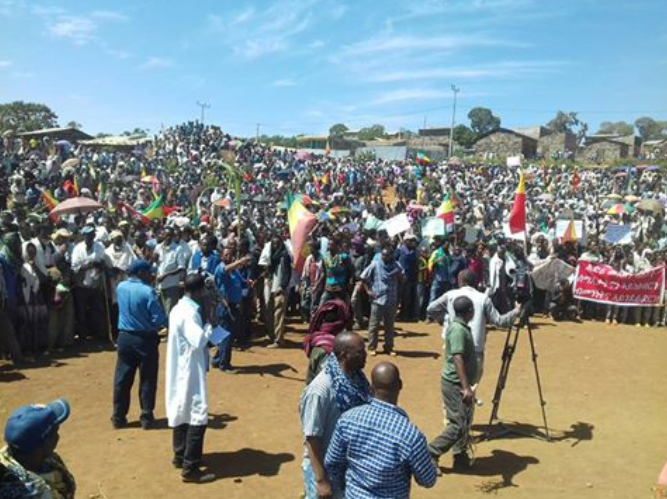
The conflict was set to be resolved during the 2020 legislative election, which would see competition between both TPLF-backed and Prosperity Party-backed candidates. This development could have acted to elevate the importance of political parties, making inter-party competition a new means by which to resolve elite conflicts. However, the crisis surrounding unsanctioned regional elections in Tigray led to armed conflict between the Tigray region and the Ethiopian government. In this war, political parties once again adopted the function of centers for the mobilisation of popular support for the cause of coercive military structures. This outcome may have been expected, considering the high political risks involved in inter-partisan competition and the challenge it created to the current model of politics based in large part on state control.
Still, the exclusion of the TPLF served to alter the function of the political party in a more fundamental way: namely, as a mechanism for political inclusion and exclusion. By self-excluding themselves from the Prosperity Party, the TPLF sent a clear political signal which identified it as the space which defined the governed and the governing. Since 2019, this status has been continuously reinforced by the shifting messaging issued by party structures or its role as the selection of candidates.
Therefore, although most of the functions of the Prosperity Party have not been unique to Ethiopia’s authoritarian system, the general trajectory of its development seems to be toward this function. As the political system becomes more personalist, and Ethiopia’s society increasingly militarised, the functions of organisation and mobilisation associated with political parties increasingly weaken. Instead, parties increasingly become delineators of individual and group relations to the nation-state: the governing, the tolerated governed opposition and those excluded from the national identity entirely. In this context, the political necessity of the recently held general election becomes clearer. Rather than representing a need to re-affirm political legitimacy, it served to identify the boundaries of political discussion and changes within the government’s agenda. In this, voting for and participating in political parties becomes a means by which to affirm citizens in their perceived identity, thus helping shape the notion of Ethiopian citizenship more broadly.
Ultimately, the function of the political party in Ethiopia’s modern history has evolved significantly. Throughout, however, it has remained constrained by the dynamics of authoritarianism, which has inherently limited its development. Regardless of the current trend toward greater democratic backsliding, it is likely that the party retains an important role in Ethiopia’s political system in a novel way, as a body which defines the relationship between individuals and groups with state power.
Bibliography
Abate, Y. B. (2024). The Role of Intellectuals in Ethiopia’s Modernization Process: A Case Study of Ethiopian Philosopher Gebrehiwot Baykedagn. Disiplinlerarası Afrika Çalışmaları Dergisi, 2(1), 65–76. https://doi.org/10.5281/zenodo.13212231
Abebe, D. (2021). Backgrounds to the Socio-political Pitfalls of Lij Iyasu (r.1913–1916). International Journal of Ethiopian Studies, 15(1/2), 81–99. https://www.jstor.org/stable/27303515
Addis Hiwet. (1984). Analysing the Ethiopian Revolution. Review of African Political Economy, (30), 32–47. http://www.jstor.org/stable/4005685
Bahru Zewde. (2001). A History of Modern Ethiopia, 1855–1991. Ohio University Press.
Berhe, A., Abbink, J., Bruijn, M. E. de, & Walraven, K. van. (2020). Revisiting resistance in Italian-occupied Ethiopia: the Patriots’ Movement (1936–1941) and the redefinition of post-war Ethiopia. In Rethinking Resistance: Revolt and Violence in African History (pp. 88–113). https://scholarlypublications.universiteitleiden.nl/handle/1887/12915
Ellingson, L. (1977). The Emergence of Political Parties in Eritrea, 1941–1950. The Journal of African History, 18(2), 261–281. http://www.jstor.org/stable/180519
Ethiopia’s Revised Constitution. (1956). Middle East Journal, 10(2), 194–199. http://www.jstor.org/stable/4322802
Farmer, W. (2025, December 3). Ethiopia’s 2026 electoral dilemma. Africa Practice. https://africapractice.com/insights/ethiopias-2026-electoral-dilemma/
Gilkes, P. (1982). Building Ethiopia's Revolutionary Party. MERIP Reports. https://doi.org/10.2307/3011494
Guidi, P. (2025). Educating the Nation in Ethiopia (pp. 45–100). Cfee (Centre Francais Des Etudes Ethiopiennes).
Hassen, M. (1994). The Oromo of Ethiopia: A History, 1570–1860. Red Sea Press.
Kobede, M. (2015, April 17). Menelik and Southern Ethiopia: Colonialization, Reunification, or Expansion? Borkena. https://borkena.com/2015/04/17/menelik-and-southern-ethiopia-colonialization-reunification-or-expansion-messay-kebede-phd/
Lavers, T. (2023). Distributive Crisis, Elite Fragmentation and the Collapse of the EPRDF. In Ethiopia’s ‘Developmental State’: Political Order and Distributive Crisis (pp. 261–289). Cambridge University Press.
Lyons, T. (2010). Ethiopian Elections: Past and Future. International Journal of Ethiopian Studies, 5(1), 107–121. http://www.jstor.org/stable/41757576
Lyons, T. (2021). The Origins of the EPRDF and the Prospects for the Prosperity Party. Journal of Asian and African Studies, 56(5), 1051–1063. https://doi.org/10.1177/00219096211007658
Schwab, P. (1970). Rebellion in Gojam Province, Ethiopia. Canadian Journal of African Studies / Revue Canadienne Des Études Africaines, 4(2), 249–256. https://doi.org/10.2307/483864
Staff, P. E. (2018, April 3). Analysis: Dr. Abiy Ahmed becomes a Prime Minister the legacy EPRDF fought against to the bitter end. What went behind closed doors and how could that shape his premiership? Ethiopia Nege. https://ethiopianege.com/2018/04/03/analysis-dr-abiy-ahmed-becomes-a-prime-minister-the-legacy-eprdf-fought-against-to-the-bitter-end-what-went-behind-closed-doors-and-how-could-that-shape-his-premiership/
The Habesha. (2021, February 11). EPRP vs. Meison, 1978. The Habesha. https://zehabesha.com/eprp-vs-meison-1978/
Young, J. (1998). Regionalism and Democracy in Ethiopia. Third World Quarterly, 19(2), 191–204. http://www.jstor.org/stable/3993156
Zewde, B. (1998). [Review of Eritrea and Ethiopia: The Federal Experience, by T. Negash]. Northeast African Studies, 5(2), 139–142. http://www.jstor.org/stable/41931166


Comments