


Sanctioning the Bench

What the ICC’s enemies learn when intimidation goes unpunished
On June 5, 2025, four individuals in the Netherlands woke up to light drizzles and a jarring announcement: they were locked out of most of the world’s financial systems. Overnight, their bank accounts were inaccessible, their cards declined, they could no longer use online purchasing platforms, and most online services were blocked. The reason for this revocation of access to the 21st century is deeply concerning: They were sanctioned by the United States for acts the US claims exceeds their jurisdiction.
These four are International Criminal Court (ICC) Judges, and they can now also be found on the Specially Designated Nationals (SDN) list: Reine Alapini-Gansou of Benin, Solomy Balungi Bossa of Uganda, Luz del Carmen Ibáñez Carranza of Peru, and Beti Hohler of Slovenia. This SDN list by the United States Department of Treasury labels the entities on it as persona non grata to American business. Coverage of this situation linked the judges to rulings regarding both alleged conduct of the United States Military in Afghanistan and proceedings tied to arrest warrants for Israeli leaders. The move reframes a jurisdictional dispute as individualized coercion: discipline the judges, and you discipline the court.

The United States of America is not shy from playing the role of global police when it benefits from it, and sometimes even oversteps its boundaries. A dangerous playbook is being normalized in this situation – one that uses financial coercion on individuals to undermine judicial independence in global courts – to discipline international courts. The dollar-centered global ecosystem is being weaponized to personally sanction ICC judges and prosecutors for judicial acts through sanctions compliance, a method other powers already use or can copy.
The ICC has had its fair share of enemies before. Multiple foreign governments have taken action against the court in different forms. Separately, advocacy groups have stated that many of the cases the court handles have been related to Africa and that the court has ignored similar cases in western countries. However, this latest retaliation is one of the most potent, and it comes from a much globally stronger nation. This pressure tactic from the United States no longer impacts treaties, diplomacy, or non-cooperation. Instead, it targets adjudicators themselves through the global financial infrastructure which they control.
A troubled history between the ICC and the US
US hostility toward the ICC is not new, but the way it is carried out is a novel approach, and one no other nation has done effectively before. The American opinion regarding the court is dismissive. “We will let the ICC die on its own. After all, for all intents and purposes, the ICC is already dead to us.” That is a direct quote from then National Security Advisor John Bolton, who directed the unsigning of the U.S. from the Rome Statute. This reflects the belief that the ICC is illegitimate as it prosecutes crimes committed by citizens of nations that aren’t participating in the Rome Statute, the charter that created the court. This belief appears to be not an American hardline, however, as the United States has selectively cooperated with the court when it is to their benefit.
The Early Relationship
The Rome Statute came into effect in the early 2000s and almost immediately afterwards the bipartisan American Service-Members’ Protection Act (ASPA) was enacted in the US. This act relied on legal and political insulation from the court rather than direct coercion of the court’s officials. Nicknamed the “Hague Invasion Act,” it authorized the President to use “all means necessary and appropriate” to secure the release of coveted American or allied personnel held “by, on behalf of, or at the request of” the ICC. The underlined message was that only America would prosecute its people, and that anybody trying to prosecute Americans would be violating its sovereignty.
A clause in the Rome Statute became a loophole for the United States to assure that citizens in foreign countries wouldn’t get sent over to the Hague. Article 98(2) of the Rome Statute states that “The Court may not proceed with a request for surrender which would require the requested State to act inconsistently with its obligations under international agreements…” The U.S. made over 100 countries sign “Article 98 agreements” or Bilateral Immunity Agreements (BIAs), which ensured that the countries would not send any American citizen to the Hague without explicit permission from the US government.
Once it had ensured the immunity of its own citizens, the benefits of cooperating with the court became clear to the US. It shared information with field investigators on multiple cases in Africa, assisted with arrests and transfers to the Hague for African warlords Bosco Ntaganda and Dominic Ongwen, incentivised the capture of ICC targets it approved, and even helped protect certain witnesses during the Obama administration. This help only came into effect in cases where the targeted people came from ICC compliant countries or UN Security Council (UNSC) referrals, and remained conditional on the ICC largely ignoring American actions in Afghanistan. This shows that the U.S. can support, ignore, or attack the ICC depending on American interests.
The Breakup
While American cooperation with the ICC slowly increased over time, tactics to threaten the court also adapted. In the late 2010s, there was a shift away from general opposition to the court to explicit attacks against named ICC staff. In September 2018, John Bolton publicly stated that the United States would respond to ICC investigations involving US personnel or allies with visa bans and sanctions. President Donald Trump penned Executive Order (EO) 13928 in his first term to create a framework for sanctions against ICC-linked individuals. The EO was revoked by Joe Biden when he became president a year later.

Trump did not back down in his second term, and re-established the same sanctions framework a year ago in EO 14203. This was particularly linked to the ICC action against the American military and Israel, tackling “illegitimate and baseless” ICC actions and authorizing asset blocking and related restrictions. This was applied as stated above to six judges in 2025, four in June for rulings regarding Americans and Israelis and two in December for a ruling on Israel. The U.S. did not wait long to retaliate against the December ruling: The ruling was announced December 15 and the retaliation was published on the 18th.
This shift in the past eight years marks a structural escalation that renders the past status quo irrelevant. Now, people’s lives are being directly affected. When individuals get targeted, they are more likely to self-censor or withdraw entirely from the sector. The personal financial coercion that operates via the global compliance ecosystem is not the first domino in the fall of the ICC, but may be a deciding one. It is doubtless that individualized sanctions will deter certain future investigations and raise the institutional cost of politically sensitive judgements.
The Result
These measures are justified by the U.S. as a defense of its sovereignty since it has not signed the Rome Statute. Even if this discussion is an important one to be had, the key question that is more urgent is whether sanctioning judges for decisions crosses a distinct line. These sanctions will change incentives inside the institution that is designed to operate independently of states, which complicates discussions on global charters.
This change sets a dangerous precedent of establishing that global bodies must respond to the whims of political leaders with the power of exiling the individuals within these bodies from global systems. The consumer financial systems revolving around the dollar mean that it is one of the only countries to have this level of power to target individuals in such a manner. The next necessary step, then, is not just condemnation but a change in design: ICC member states and partners can make judicial intimidation politically costly and operationally ineffective.
The jurisdiction debate
The United States justifies these measures as a defense of sovereignty. The American familiar core claim is that, without the ratification of the Roman Statute, the ICC does not have authority over American nationals or American decisions. According to this claim, the Court’s jurisdiction allows a non-consensual tribunal to reach into a non-member state’s conduct and potentially criminalize state policy, thus setting standards that a major global power never agreed to be judged by. This defensive posture is mantained by many American officials, particularly when the court’s actions intersect with U.S. military operations or close allies. Through this logic, the US is actively rejecting the accountability to the ICC.
Despite this, the jurisdictional design of the International Criminal Court does not rest on universal ratification. The Rome Statute establishes a system in which jurisdiction triggered through recognized bases of international law: some crimes, through territory, referrals, and acceptance by the relevant state party, are under the ICC’s authority. The Court does not claim that a non-member state has “ratified” the Statute. Under its framework, the Court’s authority derives from the consent of the territorial State Party and from the treaty obligations undertaken by States Parties under the Rome Statute, rather than from the nationality of the accused in isolation.
In this sovreignty debate, the two parties are arguing from different legal premises. The American belief is that the Court’s jurisdiction cannot be extended to a non-party state and its nationals, as that action undermines the logic of consent. The ICC’s premise, on the other hand, is that territorial jurisdiction is a universally accepted basis in international law, and a state party can consent to the Court’s authority over crimes committed on its territory, even if the suspect is a national from a non-member state.
This disagreement is a serious and legitimate legal dispute. However, it is a debate often used to conceal a more consequential issue: how states should respond to adverse jurisdictional determinations. Even if one accepts that the United States has credible sovereignty concerns, it does not follow that the appropriate response is to financially penalizing judges for performing their job. Jurisdictional disputes are provided with official routes to discusscases and outcomes that may be politically contentious, but stay within legitimate bounds.
How these sanctions work
While the concept of sanctions on nations is widely understood and a common occurrence, sanctions against specific individuals are more complicated. State sanctions can be comprehensive or just targeted on a specific industry. A perfect example of this is a number of major Russian banks being cut off from the Society for Worldwide Interbank Financial Telecommunications (SWIFT) following the Russian invasion of Ukraine. However, targeting specific persons is less straightforward as individual countries have little power over individuals. Any country sanctioning an individual typically results only in travel bans, freezing assets within the country, and prohibiting business transactions with their citizens or organizations. However, when the country in question has almost every major financial company in its national umbrella, the effects of the sanctions apply further than just within its borders.
The U.S. enables this sanctioning capacity through the SDN list, which in this case was greenlit through the latest Trump EO on the matter. The judges had only their American assets frozen and exchanges with American entities barred, but that is a very broad category considering the span of market influence and control companies based in the United States have. This loss of assets included any financial assets they had within American control as well as a loss of access to U.S. based payment networks like American Express, VISA, MasterCard, and PayPal.
Those who obey
Sanctions have requirements for many entities, including “all U.S. citizens and permanent residents regardless of where they are located, all individuals and entities within the United States, and all U.S. incorporated entities and their foreign branches.” A lot of the modern screening process for major companies is automated. Customer names and identifiers, as well as transaction metadata are frequently checked against the SDN and other lists, and even a partial match can trigger manual review. If a match is found, compliance teams typically distinguish between two outcomes, either freezing the assets involved or refusing to process the transaction while returning the funds. Their job, however, does not stop there, as they are typically obligated to escalate the hits internally and report the blocked property to regulators. Heavy costs when compliance is not ensured is why many firms respond with broad “risk management” measures.The cost of losing one account is not equal to the cost of keeping that account open and paying fines.
Many foreign banks interacting with the United States are also incentivised to obey the sanctions, which only emphasizes the outsized effect of the SDN. These banks typically rely on correspondent relationships with American counterparts, or at the very least use the dollar in their exchange. By extension, the banks want to stay on the US’ good side as they require American approval to receive such quantities of dollars, to trade with it, and to work with U.S. banks. The dollar remains in very high usage worldwide and its dominance creates structural leverage for the US government.
The effects
This overcompliance from all commercial parties involved is labeled as “De-risking” in the financial sector, defined by the Financial Action Task Force (FATF) as the decision “to avoid, rather than to manage, possible money laundering or terrorist financing risks, by terminating business relationships with entire regions or classes of customers.”. It happens for reasons other than the ones previously highlighted, including reputational risk and false positives by compliance teams. The FATF stresses the downsides of de-risking and strongly recommends sticking closer to risk-based decisions instead of overcompliance.
Individuals on the SDN are cut off from many American products and services. Apart from financial services described above, any accounts with U.S. based companies can also be shut down, including Amazon, Netflix, and Expedia. Even cloud/email providers and other platforms that often have an American branch are impacted. Modern life often involves buying products with American purchasing platforms on American vendor websites, receiving receipts on American communication platforms, and having the goods delivered through American delivery services. Designation on the SDN can lead to a total loss of all of these services.
The effects of designating important global figures who make decisions with worldwide impact is concerning. These figures and their decisions are at risk of no longer being independent, and the pressure from financial vulnerability may force them to obey the whims of those putting pressure. The public nature of these sanctions also send a clear message to any potential candidate for ICC positions that they should ensure they can live under the pressure.
Other past clashes between the ICC and other nations
The United States is not the only nation to have pressured the ICC. In fact, it isn't the only state to have attacked individual judges either. Countries use three main tactics to push back against the court: personal retaliation against judges, exiting the court to delegitimize it, and non-cooperation with warrants.
Individual Retaliation
Two countries have recently retaliated against judges, Russia and the US. They have used different approaches, with Russia pursuing criminal proceedings instead of financial sanctions. These original warrants came after an ICC ruling against Vladimir Putin in 2023, but there have been recent developments. In December 2025, in absentia convictions were handed against the ICC Prosecutor and multiple judges, with some getting up to 15 years. The U.S. uses financial coercion while Russia uses criminal punishment to push some judges to think that some cases aren’t worth the trouble.
Dramatic Exits
The more common methods typically attack the court itself instead of the judges, with a large number of examples in the past decade. The most common is to withdraw from the Rome Statute and ICC, which labels them illegitimate for the country. When fewer countries participate in the court, the court’s decisions transition from having a global effect to being more selective. Countries typically leave when citizens are under investigation, but as the ICC retains jurisdiction for crimes during membership, the effect is not protective. The first example of this happened in 2017, when Burundi withdrew from the ICC as members of the ruling party were being investigated for Crimes against Humanity. The withdrawal was signed into Burundian legislation on October 13 2016, and came into effect October 27 2017. The investigation into those crimes, however, is still ongoing.
Some cases have moved past the investigation phase and prove that the ICC still works even when a country has withdrawn. The Philippines was a member of the ICC from 2011 to 2019, but an investigation from the ICC began in 2021. This scenario demonstrates the ICC’s jurisdiction, which covers all crimes in the countries that are part of the Rome Statute during the period they were participating in the Rome Statute. This means that even if a country has withdrawn from the ICC years ago, the crimes from that period can still be investigated and prosecuted. The ICC concluded its investigation on Rodrigo Duterte, the former president of the Philippines, regarding his “War on drugs” and determined he committed crimes against humanity, allegations tied to the anti drug campaign between 2011 and 2019. In 2025, the court put out a warrant for Duterte and the Philippine government complied, even though they are no longer a part of the ICC.
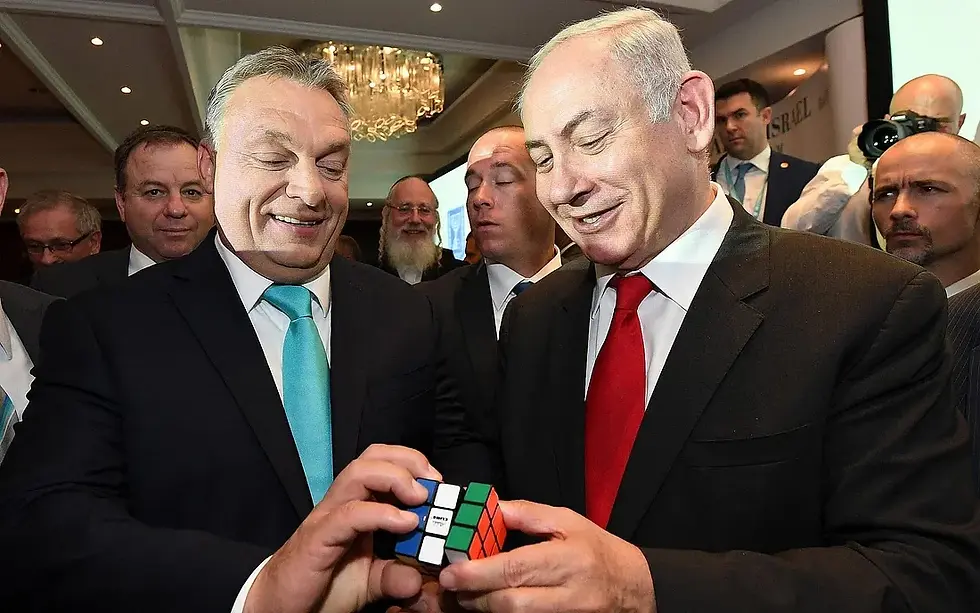
Countries have also withdrawn from the ICC when they aren’t under investigation to make a political statement. Two separate events happened last year, which resulted in four countries currently undergoing withdrawal. Hungary announced its withdrawal in April 2025 due to the ICC’s warrant against Benjamin Netanyahu, who has close ties with Hungarian president Orban. Five months later, three other countries decided to withdraw jointly. Mali, Burkina Faso, and Niger all announced their withdrawal against this “instrument of neocolonial repression”. Withdrawal and the following delegitimation is an institution-level tool that reduces the court’s reach and effectiveness while refraining from attacking individuals that work there.
Disobedience
There exist more selective and temporary ways of protest that don’t force states to withdraw from the ICC while still making their position known on the global stage. When nations sign onto the Rome Statute, they are technically obligated to enforce the ICC warrants and must arrest anyone on their territory with an active warrant out. However, some countries have in the past decided to ignore the warrants. In 2017, South Africa was found to have not complied with the warrant when Omar Al-Bashir, former Sudanese president who has an active warrant, visited the country two years prior. More recently, the ICC found non-compliance when Mongolia failed to arrest Vladimir Putin. Mongolia relies on Russian oil and gas and trades closely with it, so this failure to arrest was as much an assertion of independence from the western world as a product of dependence on its neighbor. The tactic of keeping membership but refusing arrests is the ICC’s standing vulnerability as enforcement is outsourced to the states. Those three main acts of resistance are also backed by further attempts from governments to claim a lack of jurisdiction from the court. These claims have occurred for the past 40 years from multiple nations regarding multiple topics, and only further complicates the courts actions and legitimacy.
The impacts of these sanctions
The effect of these individual sanctions spreads further than just the people on the SDN. The implications of directly attacking judges reach every party involved, including nationals of other countries, and even the US.
The ICC and its members
The ICC is the first and most impacted party in these situations. Situations like these reflect into the court’s future in multiple ways. The decision-making environment over time might shift as risk-management procedures push the ICC to consider cases with lower potential impact on the judges. Operationally, the ICC has also observed a loss of capacity as some NGOs and contractors decide to stop cooperation to avoid sanctions for themselves. This will slow down investigations, hamper judicial proceedings, and overall render the court less effective. The human factor also cannot be ignored, as turnover grows due to sanctions. Six senior staffers have left the ICC, and others are left wondering whether the organization can survive attacks from the Trump administration. Sanctions have been described as targeted and nonviolent in the past, which creates an assumption that the ICC is not impacted by sanctions on judges. However, these targeted tools can propagate within the institution when they impact judges in ways that spread to the entire process.
The impact on the ICC also spreads to its state parties. From a credibility perspective, they get hit hard: They fund and legally commit to an independent court whose officials get disciplined by countries that aren't participating in the ICC. The EU’s High Representative warned that American sanctions “may impact the functioning” of the Prosecutor’s office and ongoing investigations, which means that third parties can jeopardize safety and confidentiality for victims, witnesses, and staff. The state parties should find a way to resolve this scenario even while keeping a balance as shielding ICC personnel and discouraging overcompliance may provoke friction with the U.S.. However, failing to do so normalizes a precedent of punishment that renders the court nearly futile.

The nations
While the United States is the perpetrator of this set of circumstances, the move carries strategic costs that compound over time. The immediate benefits for taking this measure are clear, there is a distinct signal of resolve on sovereignty and the sanctions reassure key allies that the U.S. will defend its nationals and close allies. This message has been recorded in the past, as stated by John Bolton, who argued the ICC “unacceptably threatens American sovereignty” and treated non-cooperation as a principle rather than a method. This belief, however, hurts long term American interests as it weakens the “rules-based order” mindset that is often touted globally. The reduction of flexibility to rely on international criminal justice when convenient is also a major hit for the next time interests align between the US and the ICC. It has been argued that this situation is only a temporary reaction to “ICC overreach” and that the prior status quo will return when the court begins to respect American sovereignty. And while that would be a valid argument if the United States had sanctioned or slowed the court in its work, they instead went for individual court officials. Disputes over jurisdiction belong in legal arguments, not personal punishments. Finally, the precedent of this move is a real domino. Once a major power normalizes retaliation against court officials, other states will also apply similar tactics. Russia’s recent in absentia convictions against ICC officials are a demonstration of this.
The convictions already illustrate how quickly this slippery slope can become a governing tactic. UN experts described these convictions as “an unprecedented attempt to criminalise the exercise of independent judicial and prosecutorial functions of an international court.”. The U.S. did not create this category of attack, and Russia is not the only country to have done this in the past. However, as the US attacks international institutions, other states also gain both a template and an argument to do the same thing. China has long decried the rules-based order in the past as a political method, and this behavior will be further enabled. China has also used individualized retaliation tools in the past, with counter-sanctions against foreign officials and NGO leaders. The bigger prolonged implication is fragmentation. With more governments realizing that they can contest courts by targeting officials or cooperation pipelines, compliance with the ICC becomes more conditional than before.
It is not just the powerful or ICC member states that get impacted. The effect is global, and particularly felt in the global south. To many African nations, these sanctions are confirmation of the narrative that international justice is normal when it targets weaker states but conditional when it reaches powerful countries. Mali, Burkina Faso, and Niger explicitly framed the Court as an “instrument of neocolonial repression” practicing “selective justice” when they announced their intention to withdraw from the ICC. It is important to note that the court’s Africa-heavy docket is partly explained by the fact that some of the African cases entered the docket through referrals or grants of jurisdiction from African governments. However, sanctions on people working at the ICC strengthen the political use of the critique.
Non-state entities
The impact on the ICC also spreads onto individuals and non-state entities in multiple facets. While it is easy to believe that Judges won’t be influenced by sanctions, there is a clear reason to maintain the judges’, and by extension the court’s, independence. The chief prosecutor who was sanctioned lost access to email and banking accounts, complicating communication with investigators on the ground and other important parties. Knock-on effects were felt as NGOs and contractors curtailed cooperation out of fear of exposure to American retaliation. Victims and other people are not peripheral to ICC work. They are evidence pipelines, witness-support networks, and the social infrastructure that sustains the very long investigations in the court. The result on the human level is delay and attrition. There will be fewer actors willing to share evidence and higher logistical friction, slowing processes. Additionally, victims will increasingly believe that the court is vulnerable just when it is needed most.
The effects are even felt on the unwilling enforcers of these sanctions. As any American or foreign firms that conduct business in or with the United States must comply with the sanctions, many firms are pushed to “de-risk” away from the impacted people. The heavy use of sanctions means that companies have to spend more on compliance and are pushed to overcomply, creating lost opportunity cost. The international role of the dollar also exports American policies to any company that uses it, creating a structure that propagates U.S.actions farther than those of other countries. While due process for people on the SDN exists on paper, contesting a designation is complicated as the government often involves classified information. The NYU Journal of Legislation & Public Policy claims this is “limiting the extent of available notice and therefore parties’ abilities to advocate for themselves.”
The future
It's not just the present parties that feel the impact of such decisions either. The consequences will be felt through the future, as this rapidly becomes a self-reinforcing toxic cycle. This is only the first effect, which is the designations triggering compliance due to fear, and the ICC’s basic operating capacity getting hit. That disruption then becomes political evidence for the next round of pressure, as operational dysfunction gets rebranded as proof the institution is untrustworthy. As capacity and legitimacy erode, coercion becomes easier to justify and replicate, and the cycle reaches the same step at a stronger level. Over time, this will leave international offices like the ICC with no legitimacy.
Much needed actions
This current position is not a lost cause, however it may seem. To get out of it, nations must act fast to respond to US actions. The important point is not to “punish” the US, but rather to raise the cost and lower the payoff of such moves in the future. The current political cost is too low and the geopolitical payoff too high to incentivise an end of this tactic. This must change rapidly before the effects of these actions leave a permanent negative mark on the court.
What must be done
Nations need to build a norm that sanctioning individuals for working with an impartial international body must not be allowed. This red line must be clear and strong, not just an option. This can be done through regular joint declarations from EU and like-minded states, setting up the next play. Nations must highlight possible future actions that will be enacted should there be more designations. Joint declarations have happened in the past, like the Netherlands-led joint statement last July on this subject. What was missing from that declaration was the promise of a response package.
This red line can’t just stay undefended, either. There must be a protocol to protect ICC staff and related parties from sanctions and preemptively render them less pointed when attempted. This should include dedicated payment channels for staff and judges, legal support for sanctioned officials, and coordinated work by the member states to reduce private-sector overcompliance. This can be done through a resolution from the Assembly of States Parties (ASP), the ICC’s oversight body that involves all the parties that signed the Rome Statute. While statements inform the world of support, actions show that support. This also supports the EU’s political line of backing the ICC and enables judges to do their work properly.
How to do it
Operationally, this protection can be enacted by the EU with key steps. With clear EU company compliance guidelines for this matter and by using a currency like the Euro, the sanctions can be rendered less effective. Pipelines will be needed for the court’s staff to protect their capacity to receive their salary, travel (both personal and professional), pay for housing, and continued access to key digital services. This is already enabled by the agreements between the EU and the ICC where the EU agrees to provide “facilities and services… as may be required.” With a single stack of providers backed by the EU, panic and overcompliance move closer to being a nonissue. Nations, and separately the EU, can also agree to exclude any contracting/sourcing contracts to companies that carry out the sanctions against ICC functions when alternatives exist.
The EU can also protect European companies from American retaliation and guide operators on what is and isn’t legally required and how to avoid unnecessary removal of services for judges. The EU has enabled a “Blocking statute” that prohibits any company incorporated in its member states to comply with judgements from any foreign court. NGOs and think tanks like the Human Rights Watch have called on the EU to activate the statute and revise it to resolve the issues it has. In an interview with Le Monde, one of the impacted judges, Nicolas Guillou, also called for the statute to be put in effect to protect him and other officials from sanctions.
Past the protection of the red line and ensuring that the impacts of the sanctions are reduced, there are also clear cut and targeted options to impose heavy costs on the sanctioning body. The specific measures taken must reach the specific officials that take decisions against judges. Causing overcompliance or impacting whole nations would render the point moot as it provides as little moral backing, as does the original act of sanctioning international judges. Moves against individuals should resemble targeted sanctions, like visa restrictions and asset freezes on officials directly responsible for the measures. However, there must be a certain threshold for evidence against these officials, and the specific retaliatory sanctions must be defined narrowly.
States cannot stop pressure from more powerful states by condemning them, they can stop it by changing incentives that make overcompliance automatic and creating specific infrastructure to protect the ICC’s mission.
Conclusion
The situation at stake is often described as a debate of jurisdiction and sovereignty. But these 2025 SDN designations reveal something more consequential. The US’ decision to sanction judges for their decisions tests whether the court can stay impartial. This is shown as the ICC’s vulnerability is no longer limited to state cooperation, but to the willingness of its judges to stay independent while under financial pressure. This pressure tactic is particularly effective for the United States due to overcompliance and the centrality of the US Dollar, as the effects then spill outward and greatly reduce the court’s ability to function.
International courts do not need to be above criticism, but they must be protected from coercion that punishes the judges themselves. If this tactic remains easy and effective, it will not only remain American, but copied, adapted, and justified as seen before. That is why the response cannot be limited to statements of concern. If member states treat this as an unfortunate scenario, they will normalize a precedent that creates a potent weapon which will be wielded too often. If states want the ICC to remain more than just symbolic, they must treat judicial intimidation as a red line. They will need to rapidly build practical shields to protect the judges from overcompliance and prepare countermeasures so the tactic stops working
Bibliography
Allen, I. (2024, April 8). Due process boundaries of U.S. economic sanctions. New York University Journal of Legislation and Public Policy. https://nyujlpp.org/wp-content/uploads/2024/03/JLPP-26.1-Allen.pdf
AP News. (2025a, April 3). Hungary plans to withdraw from International Criminal Court as Netanyahu arrives despite warrant. AP News. https://apnews.com/article/hungary-criminal-court-withdrawal-israel-5263edb40318816508e6b998befc6ee5
AP News. (2025b, September 23). Military-run Mali, Burkina Faso and Niger pull out of key international court. AP News. https://apnews.com/article/mali-burkinafaso-niger-icc-sahel-a2bee264601233e5d02cef0d132be28b
ASIL Task Force on Policy Options for U.S. Engagement with the ICC. (n.d.)a. War crimes rewards program. ASIL U.S.-ICC Task Force. https://www.asil-us-icc-task-force.org/report/03-the-operative-legal-framework/war-crimes-rewards-program
ASIL Task Force on Policy Options for U.S. Engagement with the ICC. (n.d.)b. Support for ICC investigations. ASIL U.S.-ICC Task Force. https://www.asil-us-icc-task-force.org/report/04-us-engagement-with-the-icc/support-for-icc-investigations
Coalition for the International Criminal Court. (n.d.). Bosco Ntaganda. Coalition for the International Criminal Court. https://www.coalitionfortheicc.org/cases/bosco-ntaganda
Congressional Research Service. (2007, March 22). Article 98 agreements and sanctions on U.S. foreign aid to Latin America. Congressional Research Service. https://www.congress.gov/crs_external_products/RL/PDF/RL33337/RL33337.8.pdf
Congressional Research Service. (2022, April 8). Overview of correspondent banking and “de-risking” issues. Congressional Research Service. https://www.congress.gov/crs_external_products/IF/PDF/IF10873/IF10873.4.pdf
Dubai M., Dubois L., & Srivastava M. (2025, April 3). Hungary to leave ICC as Benjamin Netanyahu meets Viktor Orbán in Budapest. Financial Times. https://www.ft.com/content/06530b01-4e95-4841-a99a-31eff3b00972
European Union. (2018, August 7). Protecting against the effects of the extra-territorial application of legislation adopted by a third country, and actions based thereon or resulting therefrom. EUR-Lex. https://eur-lex.europa.eu/legal-content/EN/TXT/?uri=CELEX%3A01996R2271-20180807
European Union. (2023, November 22). The protection of the Union and its Member States from economic coercion by third countries. EUR-Lex. https://eur-lex.europa.eu/eli/reg/2023/2675/oj/eng
Executive Office of the President. (2020, June 11). Executive Order 13928: Blocking Property of Certain Persons Associated With the International Criminal Court. Federal Register. https://www.federalregister.gov/documents/2020/06/15/2020-12953/blocking-property-of-certain-persons-associated-with-the-international-criminal-court
Executive Office of the President. (2025, February 6). Executive Order 14203: Imposing sanctions on the International Criminal Court. Federal Register. https://www.federalregister.gov/executive-order/14203
Financial Action Task Force. (n.d.). Guidance on correspondent banking services. FATF. https://www.fatf-gafi.org/en/publications/Fatfrecommendations/Correspondent-banking-services.html
Gewirtz, P. (2024, July 22). China, the United States, and the future of a rules-based international order. Brookings. https://www.brookings.edu/articles/china-the-united-states-and-the-future-of-a-rules-based-international-order
Government of the Netherlands. (2025, February 7). Joint statement - Sanctions International Criminal Court (ICC). Government.nl. https://www.government.nl/documents/diplomatic-statements/2025/02/07/joint-statement---sanctions-international-criminal-court-icc
Human Rights Watch. (2003, June 20). Bilateral immunity agreements. Human Rights Watch. https://www.hrw.org/sites/default/files/related_material/2003.06_US_Bilateral_Immunity_Agreements.pdf
Human Rights Watch. (2025, January 15). Letter to European Commission regarding U.S. sanctions on ICC. Human Rights Watch. https://www.hrw.org/news/2025/01/15/letter-european-commission-regarding-us-sanctions-icc
ICC Forum. (n.d.). Africa. ICC Forum. https://iccforum.com/africa
International Criminal Court. (1998, July 17). Rome Statute of the International Criminal Court.
International Criminal Court. https://www.icc-cpi.int/sites/default/files/2024-05/Rome-Statute-eng.pdf
International Criminal Court, & European Union. (2006, April 28). Agreement between the
International Criminal Court and the European Union on cooperation and assistance. EUR-Lex. https://eur-lex.europa.eu/eli/agree_internation/2006/313/oj/eng
International Criminal Court. (n.d.)a. Situations under investigation. International Criminal Court. https://www.icc-cpi.int/situations-under-investigations
International Criminal Court. (n.d.)b. Philippines. International Criminal Court. https://www.icc-cpi.int/philippines
International Criminal Court. (n.d.)c. Decision under article 87(7) of the Rome Statute on the non-compliance by South Africa with the request by the Court for the arrest and surrender of Omar Al-Bashir. International Criminal Court. https://www.icc-cpi.int/court-record/icc-02/05-01/09-302
International Criminal Court. (n.d.)d. Finding under article 87(7) of the Rome Statute on the non-compliance by Mongolia with the request by the Court to cooperate in the arrest and surrender of Vladimir Vladimirovich Putin and referral to the Assembly of States Parties. International Criminal Court. https://www.icc-cpi.int/court-record/icc-01/22-90
International Criminal Court. (2025, June 5). The International Criminal Court deplores new sanctions from the US administration against ICC officials. International Criminal Court. https://www.icc-cpi.int/news/international-criminal-court-deplores-new-sanctions-us-administration-against-icc-officials
Just Security. (2018, September 10). Bolton’s Remarks on the International Criminal Court. Just Security. https://www.justsecurity.org/60674/national-security-adviser-john-bolton-remarks-international-criminal-court
Maupas, S. (2025, November 19). Nicolas Guillou, French ICC judge sanctioned by the US: “You are effectively blacklisted by much of the world’s banking system”. Le Monde. https://www.lemonde.fr/en/international/article/2025/11/19/nicolas-guillou-french-icc-judge-sanctioned-by-the-us-you-are-effectively-blacklisted-by-much-of-the-world-s-banking-system_6747628_4.html
Office of the Federal Register. (2024, May 10). Procedures governing delisting from the Specially Designated Nationals and Blocked Persons List or any other list of sanctioned persons or property maintained by the Office of Foreign Assets Control. eCFR. https://www.ecfr.gov/current/title-31/subtitle-B/chapter-V/part-501/subpart-E/section-501.807
Office of the United Nations High Commissioner for Human Rights. (2026, February 4). Russia must end reprisals and intimidation of ICC Prosecutor and judges: UN Special Rapporteurs.
Quell M. (2025a, December 1). ICC president vows to resist US and Russian pressure despite sanctions and threats. AP News. https://apnews.com/article/icc-court-trump-sanctions-russia-6f8a0c911bccaaa9551529fc03b3dcc0
Quell, M. (2025b, May 15). Trump’s sanctions on ICC prosecutor have halted tribunal’s work, officials say. AP News. https://apnews.com/article/icc-trump-sanctions-karim-khan-court-a4b4c02751ab84c09718b1b95cbd5db3
ReliefWeb. (2016, October 19). Burundi walks away from the ICC. ReliefWeb. https://reliefweb.int/report/burundi/burundi-walks-away-icc
Roth, A., & Davies, H. (2025, June 5). Rubio imposes sanctions on four ICC judges for ‘targeting’ US and Israel. The Guardian. https://www.theguardian.com/us-news/2025/jun/05/marco-rubio-sanctions-icc-judges-israel-gaza
Rubio, M. (2025, June 5). Imposing sanctions in response to the ICC’s illegitimate actions targeting the United States and Israel. U.S. Department of State. https://www.state.gov/releases/office-of-the-spokesperson/2025/06/imposing-sanctions-in-response-to-the-iccs-illegitimate-actions-targeting-the-united-states-and-the-israel
U.S. Congress. (2002, August 2). American Servicemembers Protection Act of 2002. GovInfo. https://www.govinfo.gov/content/pkg/COMPS-3074/pdf/COMPS-3074.pdf
U.S. Department of State, Office of the Spokesperson. (2025, December 18). Sanctioning ICC judges directly engaged in the illegitimate targeting of Israel. U.S. Department of State. https://www.state.gov/releases/office-of-the-spokesperson/2025/12/sanctioning-icc-judges-directly-engaged-in-the-illegitimate-targeting-of-israel
U.S. Department of the Treasury, Office of Foreign Assets Control. (2025, June 5). Counter Narcotics Designations; International Criminal Court-related Designations; Issuance of International Criminal Court-related General Licenses. OFAC. https://ofac.treasury.gov/recent-actions/20250605
U.S. Department of the Treasury, Office of Foreign Assets Control. (n.d.)a. Specially Designated Nationals (SDNs) and the SDN List. OFAC FAQs. https://ofac.treasury.gov/faqs/topic/1631
U.S. Department of the Treasury, Office of Foreign Assets Control. (n.d.)b. FAQ 11 - Who must comply with OFAC sanctions?. OFAC FAQs. https://ofac.treasury.gov/faqs/11
U.S. Department of the Treasury, Office of Foreign Assets Control. (n.d.)c. FAQ 9 - What does OFAC mean when it refers to "blocked" property? How does OFAC define “property”?. OFAC FAQs. https://ofac.treasury.gov/faqs/9


Comments